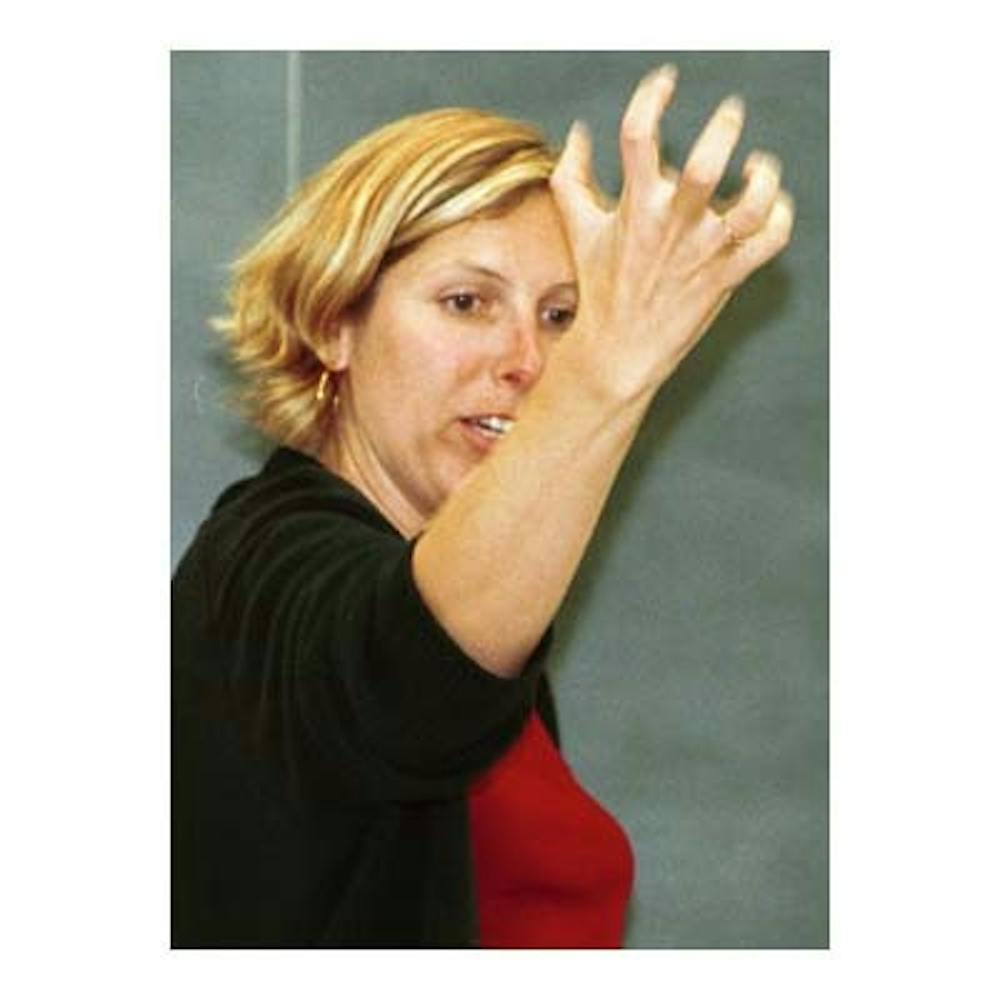
Speak freely in class discussions. Don't hesitate to see a professor outside of class if confused, and don't worry about memorizing an entire textbook chapter. These are easy enough lessons for an average college student, but they might not be as obvious to someone who's not only new to Penn but to America as well. With that cultural gap in mind, the Office of International Programs invited all new foreign students -- both graduate and undergraduate -- to Meyerson Hall yesterday for a program entitled, "Culture of the American Classroom." The session was co-sponsored by the Office of International Programs and the Department of Academic Support Programs. It was part of a week-long series designed to orient students to academic life at Penn. Holly Monheimer, a graduate student in the Graduate School of Education, provided an overview of important cultural aspects of higher education in America. She discussed the differences between lectures and seminars, the academic integrity code and the grading system. But maybe not that many students needed the advice, as only a sparse crowd of seven students -- most of whom were enrolled in graduate programs -- attended the event. Much of the talk focused on the intricacies of Penn's rules against plagiarism, which Monheimer said are typically most confusing to international students. She warned the students that cheating is grounds from expulsion at many American schools -- Penn included. Additionally, Monheimer emphasized the importance of discussion in many classes, as "many classes are based around discussion." "Professors want to hear students' opinions, so that they are sure that students have done the readings," Monheimer said. Nishi Samaraweera, a Psychology graduate student from Sri Lanka, pointed out after the talk that her class experiences here are different from those she had in Sri Lanka for the simple reason that "students are more prepared to voice their opinions." The conversation then turned to a basic challenge for many an international student: language barriers. Kate Wartchow, a learning instructor at Tutoring and Learning Resources, discussed the services that the program offers to Penn students.These include individualized study-habit sessions and writing help. International students, Wartchow said, "need help predominately with writing. They sometimes have difficulty with interpreting assignments or with grammar." In addition to lists of resources, facts about the American classroom and a copy of the academic code, students also received a list of commonly used contemporary phrases. Monheimer assured the students that they would learn more slang as they spent time around their American classmates. She assured them, however, that looking over the phrases and their colloquial meanings -- which range from "What's up?" (a greeting) to "bombed" (intoxicated or failed) -- could be helpful in understanding the conversations in their new classrooms.
Foreign students learn the American way