Sister Mary Scullion spoke to about 35 people at the Newman Center yesterday on what has become one of the most talked about topics on campus -- homelessness. The 30 minute speech entitled "Perspectives on Homelessness" was the final lecture in the Newman Center's four-part luncheon series. "I think what most people think about homelessness is stereotypical -- alcoholic men on the streets. [But] there are a lot of families, single women and mentally ill [who] are part of the community," said College junior Mary Beth Kelly, co-education chairperson of the Newman Council. "[Scullion] is proof that one person can make a difference." Scullion co-founded Women of Hope in 1985, an organization which provides services for homeless and mentally ill women. She is also heavily involved in Project HOME, or Housing, Opportunities for Employment, Medical Care and Education. She described her work as a "partnership with chronically homeless men and women in Philadelphia in order to break the cycle of homelessness." Though Scullion's speech analyzed homelessness as a political issue and offered steps for a solution to the problem, it also had a religious and spiritual undertone. "What does the gospel have to say to the homeless man, a veteran of four and a half years of the war in Vietnam and now six years on the streets of Philadelphia," she asked. "What does the gospel have to say to this 'invisible' man?" Scullion also called for increased government participation in the U.S. in order to alleviate such a widespread problem. "How [can] the United States give tax abatements to the wealthy persons moving into million dollar housing and then turn around and insist that [it] cannot afford to offer anything more than a cardboard box to house others," she asked. "I think it is a scandal that people who fought for our country are now living on our streets . . . but the government doesn't always recognize that." Scullion said that she sees today's society as a "crossroad" for a possibly more caring future generation. She praised director Spike Lee's Malcolm X because it depicts a man who lived his life not accepting the cultural norm of discrimination and prejudice. She also said she feels that students are becoming more aware and more involved in community service activities, instead of "going home to nice sheltered lives and just hoping that everything will work out." She stressed that getting a good education is the first step to being able to help other people. "Knowledge is power, and I hope that people here are really dedicated to acquiring that education," she said. "[But one has] to use it, not just for . . . personal gains, but to use it for the good of the whole . . . community." Scullion will be awarded this year's Medical College of Pennsylvania/Gimbel Philadelphia Award tomorrow afternoon at a luncheon in her honor. The award is given to "women in the greater Philadelphia area who make major contributions to humanity," said Phil Murray, director of special events at the Medical College of Pennsylvania. According to Murray, the emphasis on the award has always been on the person working for humanity in addition to her professional accomplishments for the community. Each year's recipient receives a tribute scroll and a monetary award. No H&J; required. Do not bother inserting ! -- Michael ' What does the gospel have to say to the homeless man, a veteran of four and a half years of the war in Vietnam and now six years on the streets of Philadelphia? ' Sister Mary Scullion Homeless advocate
The Daily Pennsylvanian is an independent, student-run newspaper. Please consider making a donation to support the coverage that shapes the University. Your generosity ensures a future of strong journalism at Penn.
DonateMore Like This

A history of the Penn presidency
By
Aidan Shaughnessy
·
9 hours ago

No — AI will not wipe out humanity by 2030, Penn experts say
By
Addison Saji
·
9 hours ago

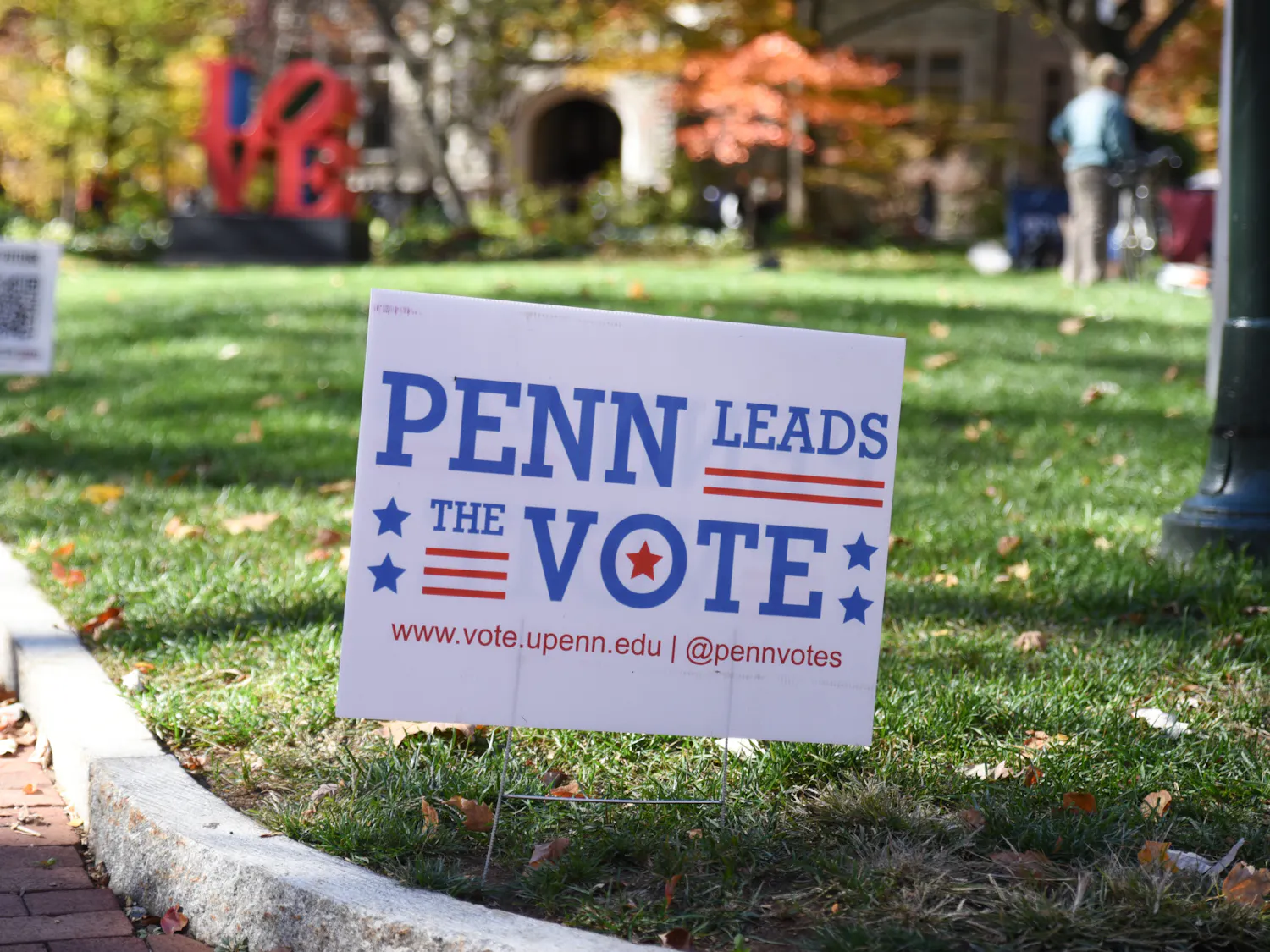
Penn student groups promote voter registration on Locust Walk
By
Mara Flores
·
9 hours ago