From Mike Farber's "I Want My MTV," Fall '92 Speaking to the local political operatives in New Hampshire --the seasoned political hacks who live for the presidential elections once every four years -- it became evident that the throngs of bright-eyed, fresh-faced undergrads had dwindled over the years. These same operatives told me that student political activism is a relatively recent phenomenon. Enthusiastically they recalled 1968, when the impact of college students was most felt. That was the year Eugene McCarthy and his thousands of student supporters forced President Lyndon Johnson from the race. As I stood in the snows of New Hampshire, these same political operatives predicted that the large amount of undergrads involved in the 1988 campaign indicated that student activism was back on its way up. Student activism hadn't died, they told me, it was just in hibernation. One year later, their predictions looked right on the mark. A crowd of over 2,000 was crammed in front of the basketball arena at Boston College. The impetus for this throng was an impending speech by Oliver North. None of us had any inclination to go in for the speech, but everyone wanted to make their voice heard. Everyone had their own reasons for protesting. Primary among mine was the fact that, without consulting the student body, the entire student government budget for speakers was blown on North's $25,000 speaking fee. Others were there because they disagreed with North's illegal actions in the Iran-contra affair, or because they wanted the public to know that there was also some strong opposition to North on B.C.'s campus. Wherever you find activism, you will usually find diverse motives among the activists. It is impossible to achieve consensus on every issue, especially among those who feel deeply enough to get involved. But in an effective activist campaign, all involved keep an eye towards their common final goal. Many think of activism only in terms of political campaigns. But activism goes much deeper than stumping for candidates, it includes fighting for causes. The abortion-rights movement is driven by a need for freedom of choice. The civil rights movement is driven by a need for equal justice. It is only part of these movements to support candidates that promote these causes. Many think of activism only in terms of protests. But activism takes many forms. It includes petitions, meetings, and letter-writing. An effective campaign of this sort is currently being waged against The Daily Pennsylvanian for the racist picture run on the front page of the DP last month. Many think of activism as involving only outspoken individuals making fiery statements. However, many of history's most effective activists changed society by simply setting an example. Jackie Robinson, major league baseball's first African-American player, faced unimaginable obstacles in breaking down baseball's color barrier. Partially out of necessity and partially due to his personality, Robinson never snapped at those who wanted to drive him out of the game. Instead, he let his cool demeanor and Hall of Fame performance change baseball and society forever. Two weeks ago a remarkably successful "Vote For a Change" rally was held on the College Green. Penn grad Ken Olin served as the keynote speaker (though not the most persuasive -- that honor is reserved for Kamal Latham, a Temple University freshman). Olin railed against the Reagan and Bush administrations for taking the political process away from college students. This observation was right on the mark. College students as a whole tend to question authority, thus resulting in a change-oriented, or liberal, ideology. This view of the world is diametrically opposed to that of Reagan and Bush. Thus, college students were not courted as a voting bloc. In fact, they were completely ignored, in the hope that not involving them in the political process would enhance Reagan and Bush's chance for re-election. Bill Clinton's efforts to reach out to college-age voters have magnified the last 12 years of neglect. Republicans make fun of his appearances on MTV and "The Arsenio Hall Show," but those of us who watch him on these outlets feel a certain connection with him. Clinton is reaching out to us, looking to include us in the political process. Clinton's inclusiveness of students in a political campaign may offer the easiest entry for students into the world of activism. Campaigns are organized activist organizations, with only warm bodies needed to perform their functions. Once students have had this first taste of activism, many of them will want to spearhead efforts to change other segments of society. With this enthusiasm for activism, we students can grow in our role as society's barometer of change. Michael Farber is a third-year Law student from Harrisburg, Pennsylvania. "I Want My MTV" appears alternate Tuesdays.
The Daily Pennsylvanian is an independent, student-run newspaper. Please consider making a donation to support the coverage that shapes the University. Your generosity ensures a future of strong journalism at Penn.
DonateMore Like This

A history of the Penn presidency
By
Aidan Shaughnessy
·
12 hours ago

No — AI will not wipe out humanity by 2030, Penn experts say
By
Addison Saji
·
12 hours ago

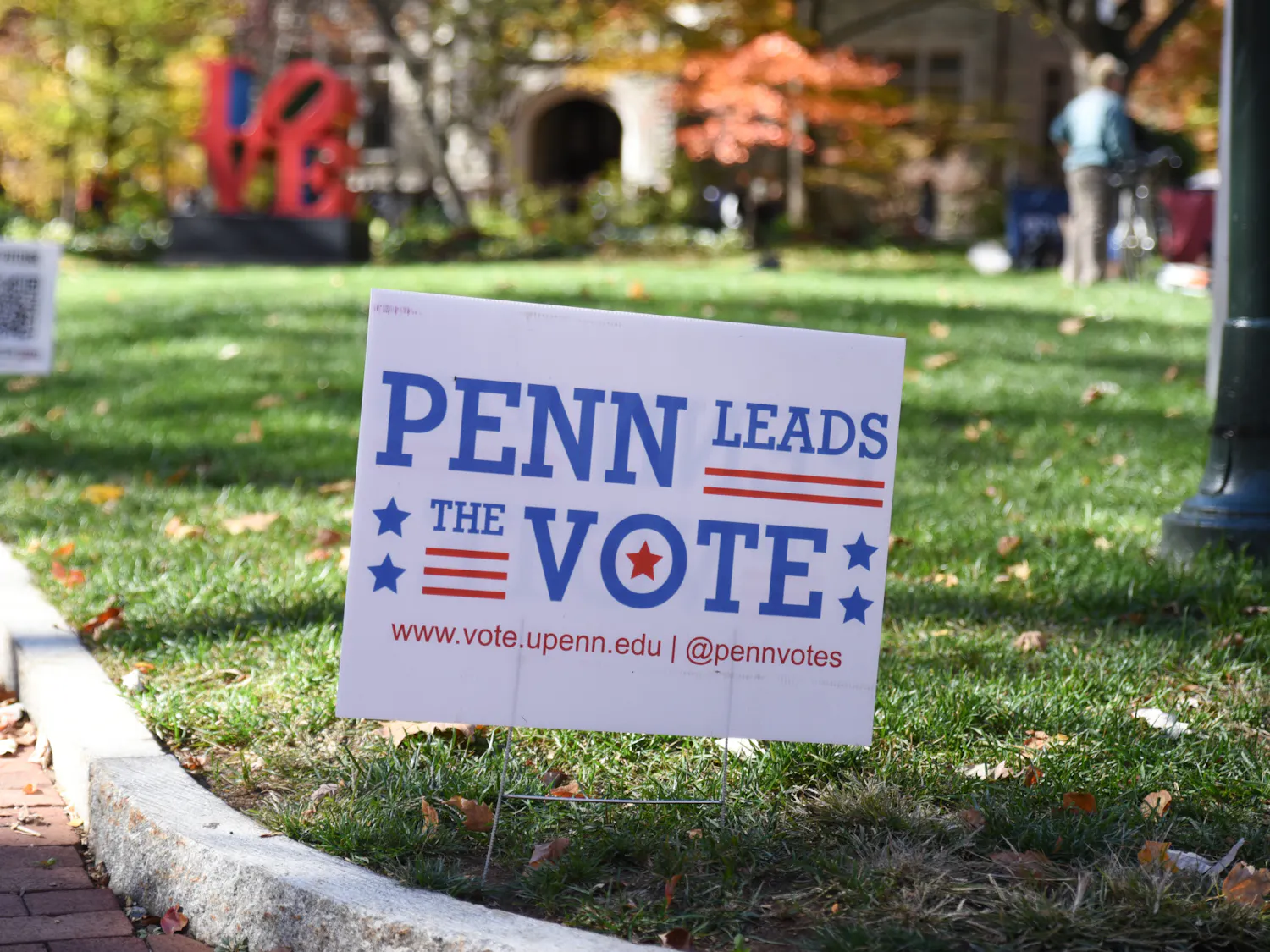
Penn student groups promote voter registration on Locust Walk
By
Mara Flores
·
12 hours ago