Penn researchers will have more time to complete select projects under a provision in Pennsylvania’s new budget.
The 2026-27 state budget, signed by Gov. Josh Shapiro on July 12, includes new flexibility for research projects supported by the Commonwealth Universal Research Enhancement Program. Penn and other organizations advocated for the change, which allows the state Department of Health to grant one-year extensions beyond the program’s previous four-year limit.
In the past, projects supported by CURE had to be completed within four years of when the grant was awarded. The recent change provides faculty and students at Penn more time to finalize their research plans.
Funding from CURE is intended to support broad-based research related to clinical and health services, along with projects on tobacco use.
Children’s Hospital of Philadelphia also advocates at the state level for the CURE program.
Professor of pediatrics Stephan Grupp, who also researches at CHOP, has supported his work through CURE for several years. According to a webpage regarding the program, Grupp “credits CURE dollars with contributing to his breakthrough research on treating pediatric leukemia with T-cell therapy, which is now approved by the FDA.”
The CURE program was created in 2001 to redirect payouts from major tobacco companies directly into biomedical research.
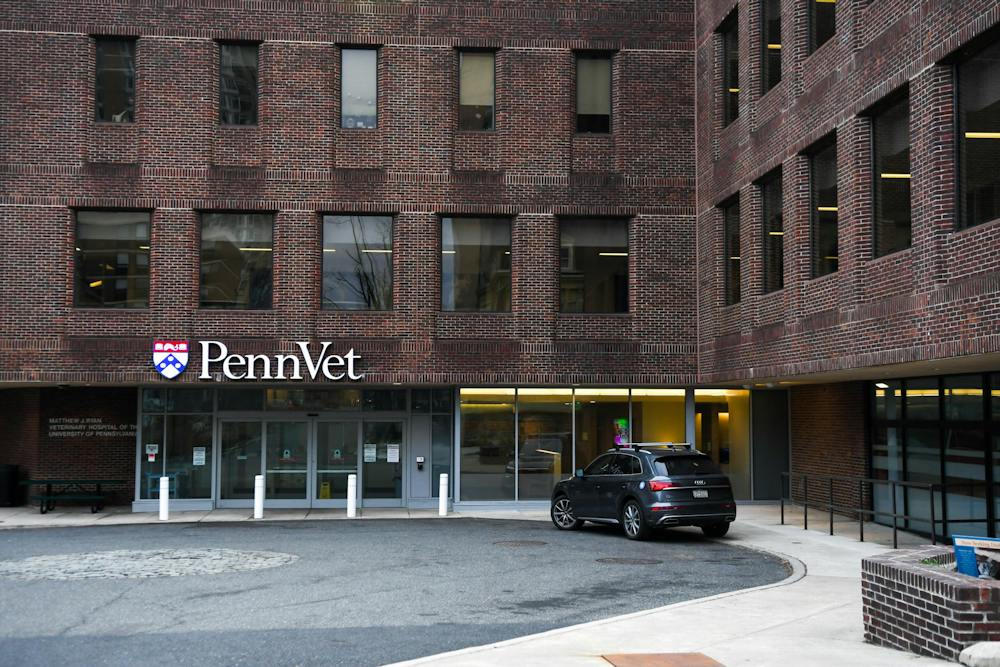
The state budget also includes annual support for the School of Veterinary Medicine, as well as an additional $1.793 million for Penn Medicine’s Division of Infectious Diseases.
A Penn Vet spokesperson previously wrote to The Daily Pennsylvanian that the school is “grateful to the General Assembly and the Governor’s administration” for funding its “education, clinical, testing, and research services.”
“We play a vital role in advancing the profitability, viability, and safety of Pennsylvania’s farms and protecting our food supply against devastating diseases such as avian influenza,” the spokesperson added.
In March, the Pennsylvania House Appropriations Committee unanimously approved the legislation. Later that month, lawmakers introduced an amendment that would have set aside $11 million of Penn Vet’s funding as scholarships for Pennsylvania residents attending the school.
The amendment failed in a 99-102 vote during House consideration of the bill.
The House Appropriations Committee again approved the original version of the bill on July 1 despite unanimous Republican opposition. Later that day, the full Pennsylvania House of Representatives passed the original bill with broad bipartisan support.