

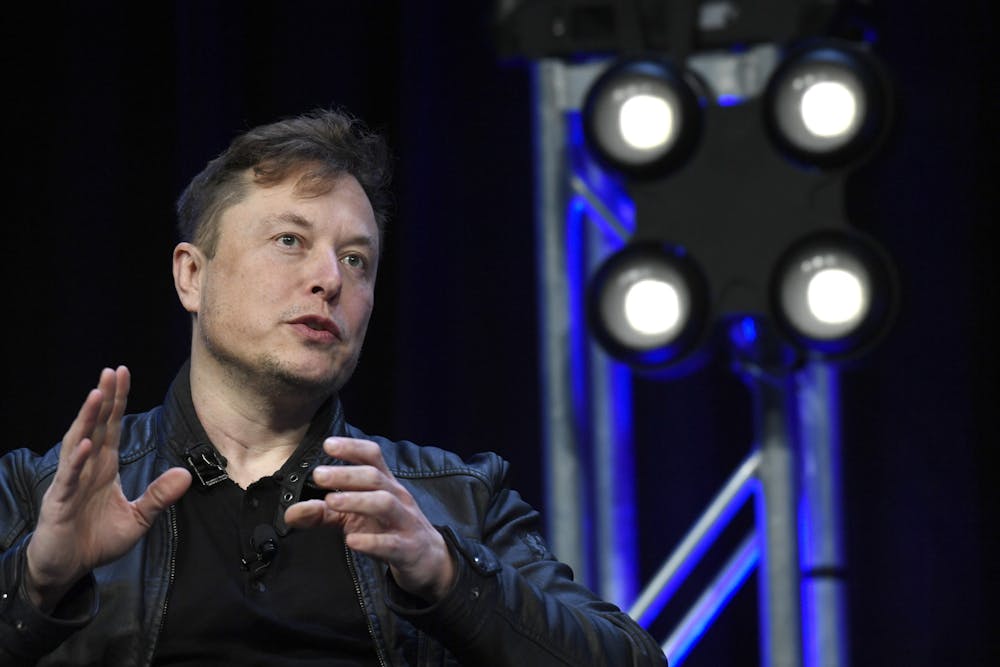
1997 College and Wharton graduate Elon Musk became the world’s first trillionaire after SpaceX’s historic Wall Street debut on Friday.
The company’s shares opened at $150 and kept rising, reaching $166.90 around 12:20 p.m. ET. That price gave SpaceX a market value of $2.18 trillion, bringing Musk’s net worth to an estimated $1.1 trillion.
Institutional and retail investors jumped at the opportunity to buy 555.6 million shares of SpaceX at the offering price of $135 apiece. The $75 billion in proceeds easily topped the previous record IPO from oil giant Saudi Aramco in 2019.
However, analysts at research firm Morningstar, which doesn’t earn any investment banking fees, wrote that the IPO is “significantly overvalued” because of SpaceX’s unproven technology and massive capital needs. They estimate the company is only worth $780 billion — less than half its IPO value.
Musk says SpaceX is going public now because it needs money to fund its ambitions of putting satellites and data centers in space and eventually establishing a colony of people on Mars. To reach its goals, SpaceX needs billions more than it currently takes in from its rocket and satellite business. Between the start of 2025 and March 31, 2026, the company lost $8.7 billion.
Since it went public in 2010, Tesla — for which Musk also serves as CEO — has returned 20,000% for shareholders, or more than $1.2 trillion in investor wealth. That has helped lift Musk’s pre-SpaceX IPO worth to $795 billion, according to Forbes magazine.
SpaceX is the first of three “megacap” companies expected to go public this year, with Anthropic and OpenAI to follow. Nasdaq even revised its rules to allow SpaceX to gain entry into funds tied to its indexes in 15 days, which means investors will end up buying the rocket maker’s shares much earlier.
Last year, Musk gained national attention when President Donald Trump appointed him to lead the Department of Government Efficiency. His simultaneous roles as a government official and CEO of multiple companies also sparked debates about conflicts of interest and the concentration of power among tech billionaires in the Trump administration.
RELATED:
Meet Alex Chen, the 19-year-old who hacked his way from Penn to Elon Musk’s AI company
Penn Hyperloop wins Rookie of the Year award at Elon Musk’s The Boring Company competition finals
Trump graduated from the Wharton School in 1968 with a Bachelor of Science in economics.
RELATED:
Meet Alex Chen, the 19-year-old who hacked his way from Penn to Elon Musk’s AI company
Penn Hyperloop wins Rookie of the Year award at Elon Musk’s The Boring Company competition finals
Senior reporter Lavanya Mani covers legal affairs and can be reached at mani@thedp.com. At Penn, she studies comparative literature. Follow her on X @LavanyaMani_.


