

In an era rife with illegal artifact trafficking, the Penn Museum stands alone as the first museum to adopt the legal guidelines established at the 1970 UNESCO Convention, which prohibited unethical acquisitioning practices.
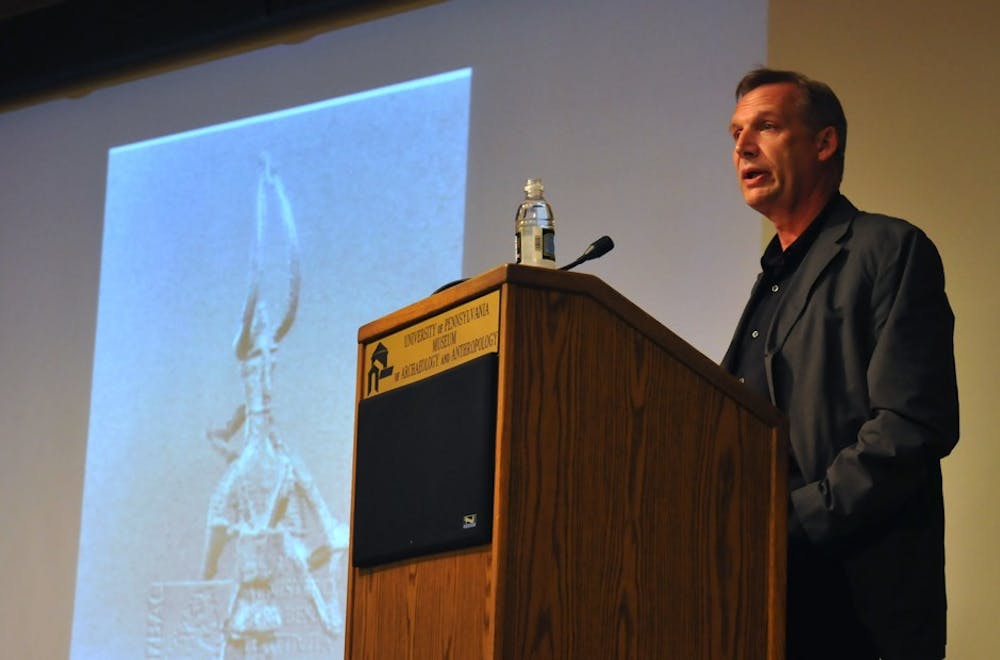
Thursday, the Penn Museum hosted the Philadelphia Museum of Art’s chief executive officer and director Timothy Rub to discuss the issues that continue to plague museum relations today.
The lecture, titled “The Shape of Things to Come,” addressed a variety of topics, including the distinction between stewardship versus ownership of art, asymmetrical relationships between American museums and source countries and the problem of “orphaned” items — artifacts with no legitimate documentation of ownership. But one of the points that Rub emphasized most was how to gain greater access to significant works of art without demanding ownership of them.
“American museums need to push source countries to liberalize their loan policies,” he argued, “but at the same time, we need to increase our own standards of care [for these artifacts].”
While their roles as stewards dictate that museums be responsible for the management, care and display of the artifacts they hold, Rub believes that many have fallen into focusing solely on purchasing antiquities.
“It’s become a problem of property and in one way, a point of pride,” he said during a question-and-answer session. He also repeatedly stressed that American museums needed to direct their resources to establish working relationships with source countries and international institutions that can facilitate long-term loan agreements for antiquities.
He conceded, however, that this would not be feasible in the near future due to the problem of asymmetrical relationships. With large discrepancies in bargaining powers between developed nations and third-world countries, American museums have the easy choice to simply sidestep international legislation without consulting source nations for permission.
College senior Anthony Prinzivalli agreed. “It would be great to see more dialogue between countries and American museums regarding universal representation.”
For College senior Tyler Ebeling, the most striking aspect of the lecture was “the speaker’s proposition that loans were the way to go forward. It was also interesting to see how our speaker envisioned the relationships between the museums and third-world countries.”

