

Penn students with internships in New York City this summer will have no guessing to do when it comes to calorie counting.
With a new regulation by New York City Department of Health and Mental Hygiene, scheduled to take effect on April 15, all New York branches of national chain restaurants must post calorie counts on their menus.
Some provisions implemented by Penn Dining last fall have prepared students for the constant barrage of nutrition facts.
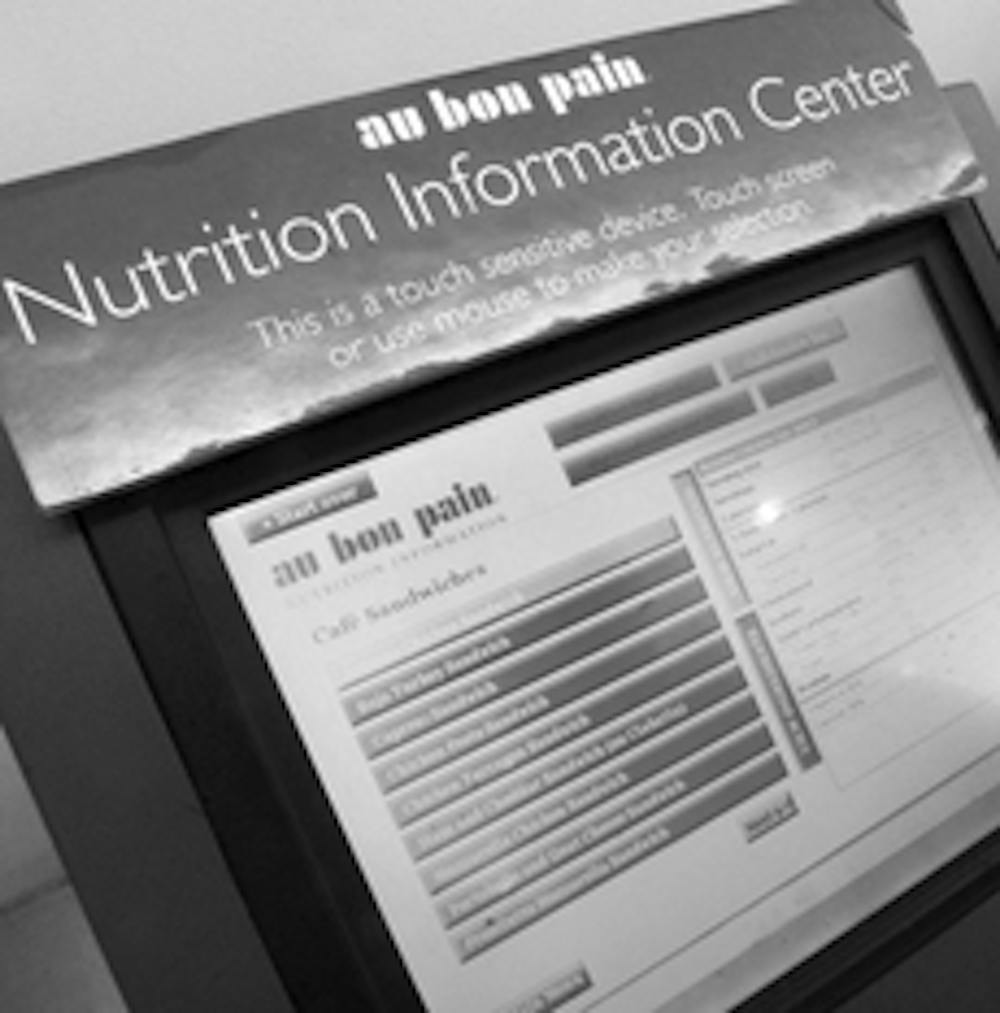
Though the city of Philadelphia does not regulate calorie posting, Penn Dining began posting calorie counts and nutritional facts for dining hall items on its Web site last September. September also marked the installation of nutritional kiosks in dining hall locations, enabling students to access the information on site.
In addition to the electronic services, health-conscious students are also invited to meet with staff nutritionist Karla Goldstein, who hosts "Dining with the Dietician" several times each month in various dining halls and offers one-on-one consultation for students.
"I get a lot of students who are interested in the menus and ask about calories and a lot of people who are interested in increasing muscle and lowering fat," Goldstein said.
One of Goldstein's most popular services is the body composition scale, which offers data on seven parameters: weight, body fat, body water, muscle, basal metabolic rate, metabolic age and bone mineral.
While Penn Dining has stepped up its commitment to nutrition in its dining halls, the same isn't true for retail vendors, where nutritional information remains widely unavailable.
According to Business Services Director Barbara Lea-Kruger, "plans for extending the kiosks to Houston Market and Savory on Spruce are in the discussion phase," but "no decision has been made yet."
College freshman Jen Poon said she is satisfied with Penn Dining's kiosks and Web site offerings but that the system would be improved if nutritional information were posted next to the actual food items in the dining halls.
"It's unrealistic to think that students would go online" to access the information, she said.
Indeed, nutritional offerings at some schools are more extensive than the ones Penn has implemented this year. At Tufts University in Boston, for example, calorie counts, nutrition facts, ingredients and a list of allergens are posted on signs next to every dish.
College sophomore Lisa Schlesinger said more visible nutritional information would promote health-consciousness on campus.
"For someone like me who wouldn't normally think about nutritional information, maybe just the fact that it exists would encourage me to use it," she said.

