

From 50 Cent to Eminem, hip-hop artists have been accused of inciting violence and sexism, but are they also trying to inspire?
Last night at Houston Hall, the Race Dialogue Project held the event "Soulja Boys: Hip-hop, Violence, and the New Civil Rights" to address such a question.
The Race Dialogue Project is part of the Greenfield Intercultural Center on campus and aims to have one event per semester to "facilitate the discussion of sensitive issues surrounding race, class, gender and sexuality," said Elizabeth Lane, one of the event coordinators.
The Philadelphia community was represented at the event through a large group of 12 to 18 year olds from the local Abington school district. Abington Junior High student Cassio Harris said he "learned a lot of stuff [he] didn't know about poverty, prison and hip-hop."
Helping to answer the question "Is hip-hop bad, or does it just have a bad rep?" were two guest speakers, Dr. Ewuare Osayande and James G. Spady.
Osayande, author of the book Misogyny and the Emcee: Sex, Race, and Hip Hop, spoke about how hip-hop has strayed from its uplifting and true roots, accusing the genre of "glamorizing and condoning violence, sexism and racism."
He talked about how women in the industry "have been relegated to the backside, showing their backside." His speech ended with a call to those present to challenge the industry to reform.
Spady, author of a trilogy of books on hip-hop music including The Global Cipha: Hip Hop Culture and Consciousness, talked about the genre as a continuation of a long historical tradition.
Spady said hip-hop "isn't just a dance movement or lyrical expression. It's a way of life."
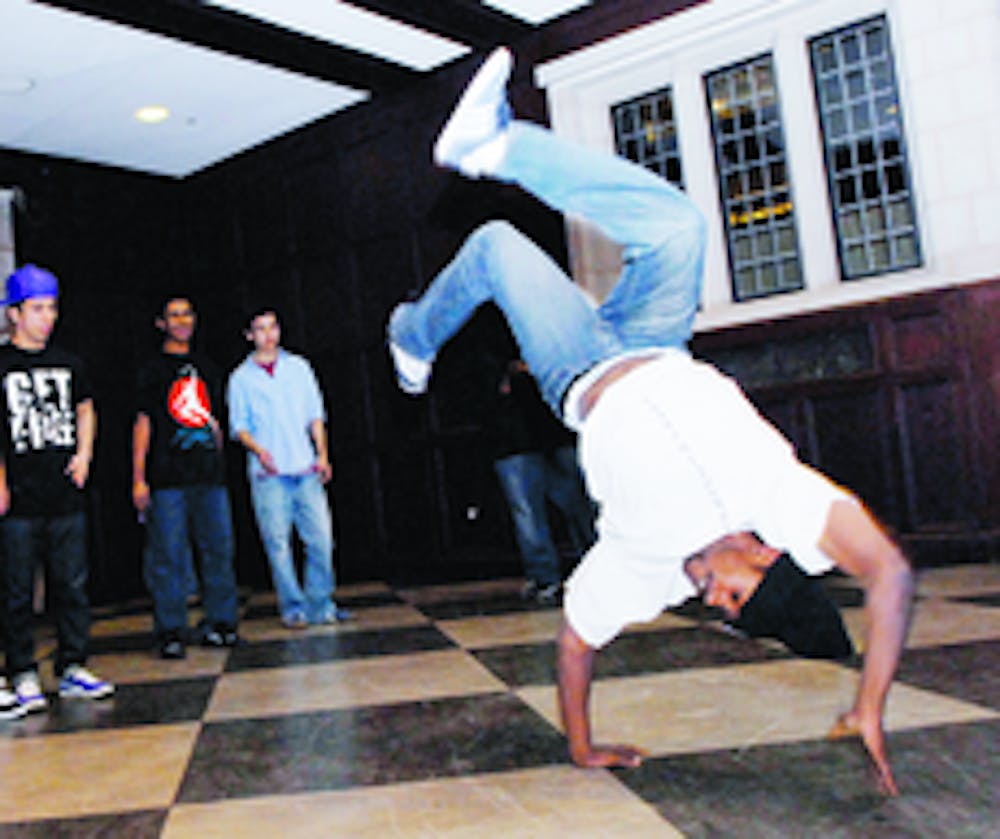
The program also incorporated booths displaying the various sides of hip-hop, a performance by Penn's breakdancing group Freaks of the Beat and smaller discussion groups.
One of the booths considered hip-hop as an intellectual medium, comparing quotes from several scholars to quotes within popular songs.
The issue of violence in the media was the topic of a video presentation compiled by Drexel junior Sean Jin, one of the event organizers and a member of the Race Dialogue project.
"We wanted to show that, yes, hip-hop is misogynistic and violent, but look at the videos people watch. If you took hip-hop out of the equation, the media would still be misogynistic and violent," said Jin.

