

When classes start next week, there will be two notable professors missing from campus.
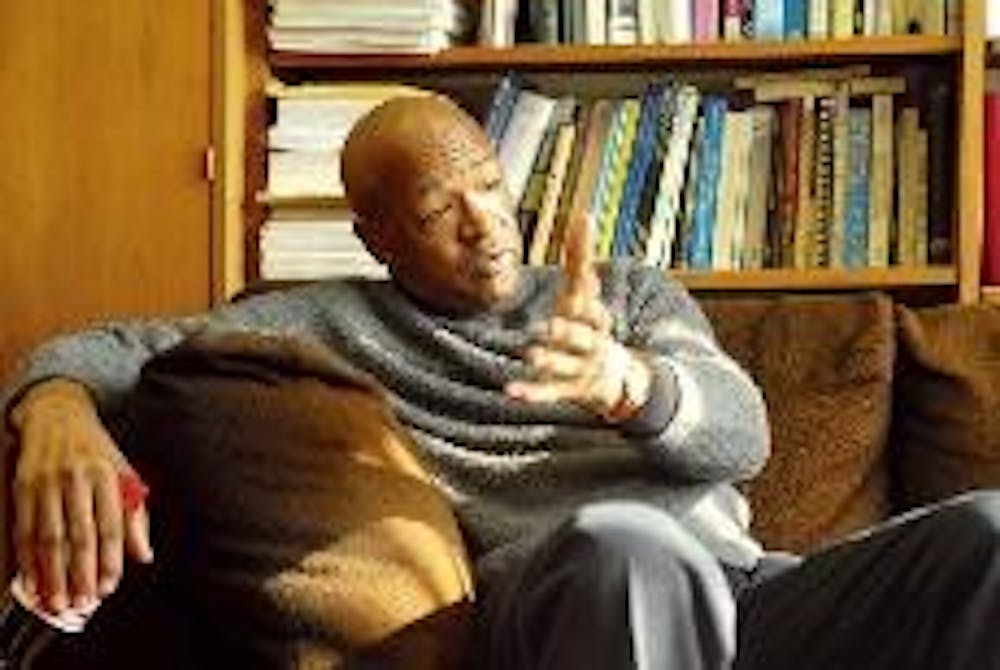
Elijah Anderson, a Sociology professor for over 32 years and a noted specialist on urban inequality, will join the sociology department at Yale University this fall, while Religious Studies professor Michael Eric Dyson will teach at Georgetown University.
And though two black professors leaving at the same time is a hit to faculty diversity, Penn representatives say it's not uncommon for senior academics to change school for various, unrelated reasons.
Anderson's departure comes after serving as undergraduate chairman of the Sociology department. He has published various works on the urban black experience, including the noted book, The Code Of The Street: Decency, Violence and the Moral Life of the Inner City.
Dyson's resignation, on the other hand, came after only five years of teaching at Penn. The controversial academic, well known for his focus on popular African American culture, released his 15th book in June, Know What I Mean?, an examination of hip-hop music.
The scholars' "departures, while significant, don't eliminate all faculty of color from Penn," said Tukufu Zuberi, Sociology department chairman and director of the Center for Africana Studies.
Such departures are a general trend in the upper echelons of academia - notable professors have the tendency to circulate through various top schools, said Vincent Price, associate provost for academic affairs.
Price said that "it's certainly a difficult thing for a university to lose senior faculty, . but we recognize faculty move around for a whole host of reasons."
Anderson experienced controversy relating to some of his publications three years ago, when he publicly stated that Penn Sociology professor Kathryn Edin failed to properly cite his work in her book, Promises I Can Keep: Why Poor Women Put Motherhood Before Marriage; Anderson accused her of alleged conceptual plagiarism.
"That [disagreement] is pretty much in the past," Anderson said, adding that the controversy was privately resolved in 2005 and was not a factor in his departure.
Edin, who resigned from her post at Penn before Anderson did, could not be reached for comment.
Dyson, who did not return repeated interview requests, will assume the highest position a faculty member can hold- at Georgetown, a so-called university professor.
"This is the way it often is with public intellectuals," Religious Studies Chairman Stephen Dunning said. "Other schools are constantly making offers. . [Dyson] is a star, and we're sorry to lose him."
In a July press release, Georgetown Provost James O'Donnell called Dyson an "intellectual leader in society."
Dunning said Georgetown's location in the nation's capital was the primary factor that lured Dyson away from Penn.
"Philadelphia is an exciting city, but in terms of power politics, it's not the same."

