

"Angry White Man" may not be as angry as you think he is.
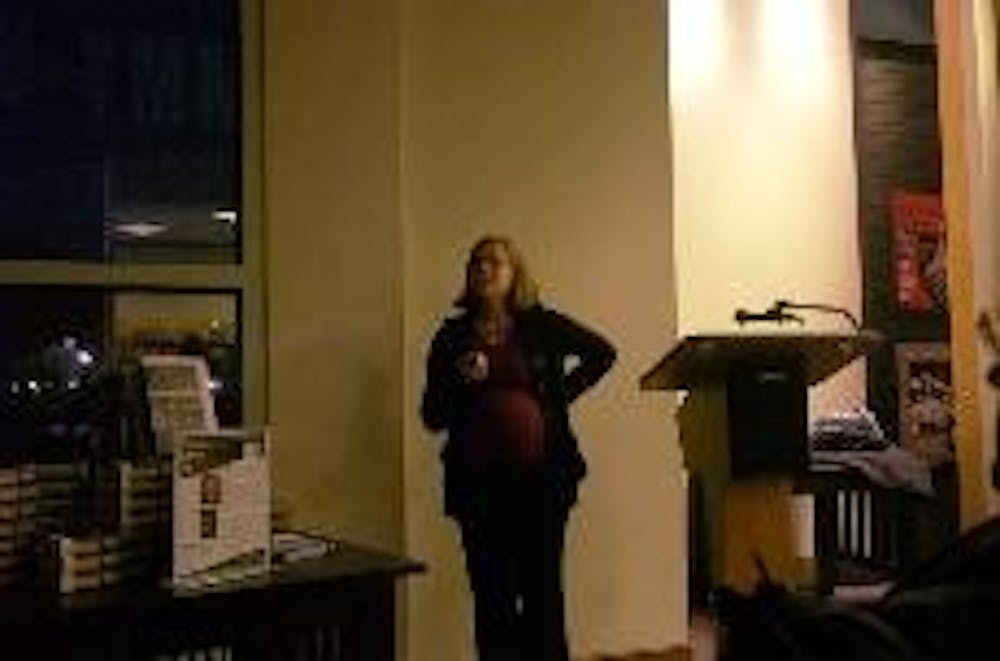
History professor Sarah Igo presented her book The Averaged American - in part about how statistics create incomplete stereotypes of American individuals - at the Penn Bookstore last Thursday night to a cozy audience of just over thirty members.
Her book discusses how surveys are produced, the role they play in shaping American consciousness and identity and the evolution of Americans' reactions to invasive questions that leave no aspect of life unexamined.
Her dissertation-turned-book received the 2006 President's Book Award of the Social Science History Association.
"Surveys have played a larger and larger role in American life in ways we don't even think of," she said. "What does it do to society to have social-scientific norms? It has created a homogenous, conformist culture."
She argued that surveys project an image of the "average American," and, through this image, create social realities.
Her book traces, in narrative form, the history of empirical data in America through three phenomena in statistic-based social research: The Lynds' comprehensive study of life in Muncie, Ind., published as "Middletown" in 1929; Gallup and Roper's weekly polling in the 1930s; and the scandalous Kinsey reports about sexuality in 1948 and 1953.
She also discussed the influence of statistical data on the American psyche and the creation of "statistical morality."
The Kinsey studies, for example - which extensively probed variances in sexual behavior - "lifted a large weight of guilt" for many who feared their behavior was abnormal and who took comfort in the knowledge that many others felt and acted the same way.
She was careful to point out the dangers of measuring oneself via social data, as they present a "skewed perception of the public." Such a skewed perception ignores "diversity, marginalizes people and over-simplifies people into caricatures such as 'The Soccer Mom' or 'Angry White Man.'"
"It's an important work on the subject. If I were doing research on the topic, I would definitely consult this book," said History graduate student Matthew Hersch, who is enrolled in one of Igo's classes
Several alumni who had and loved her as a professor also came to hear her speak.
"She is one of the most popular professors of pop culture and mass-consumer society," said 2005 alumnus Tom Kurland.

