

Penn's main purpose may be to educate its students, but it seems like the Philadelphia Police Department could learn some lessons from the University as well.
As the focus in the race for Philadelphia's mayor centers on reducing crime, criminologists say solutions for the city may come from Penn's own policing techniques.
Developments that first came to Philadelphia via Penn's campus, like bicycle policing and closed-circuit surveillance cameras, are now making headway in other parts of the city.
Communications, too, have been more fully developed at Penn. For three years, Penn Police have had access to the Philadelphia Police's radio frequency, allowing them to interact efficiently to deal with crime near the University.
Other police departments in the city, such as the Housing Authority police and SEPTA police still don't, though - an issue mayoral candidate Dwight Evans has said he wants to address if elected.
When city police departments are asked why they haven't adopted Penn's close ties to the Philadelphia Police, there isn't a good answer.
Housing Authority Lt. William Cramer said there was no real reason for the disconnect between the various police forces, and added that "we want a single band very much."
As for the CCTV cameras, mayoral candidate Chaka Fattah has pledged to introduce 1,000 cameras across the city as one of his main crime-fighting plans.
CCTV cameras have been part of Penn's policing techniques since 1999, and they are now a major part of Penn's policing both on campus and west of 40th Street.
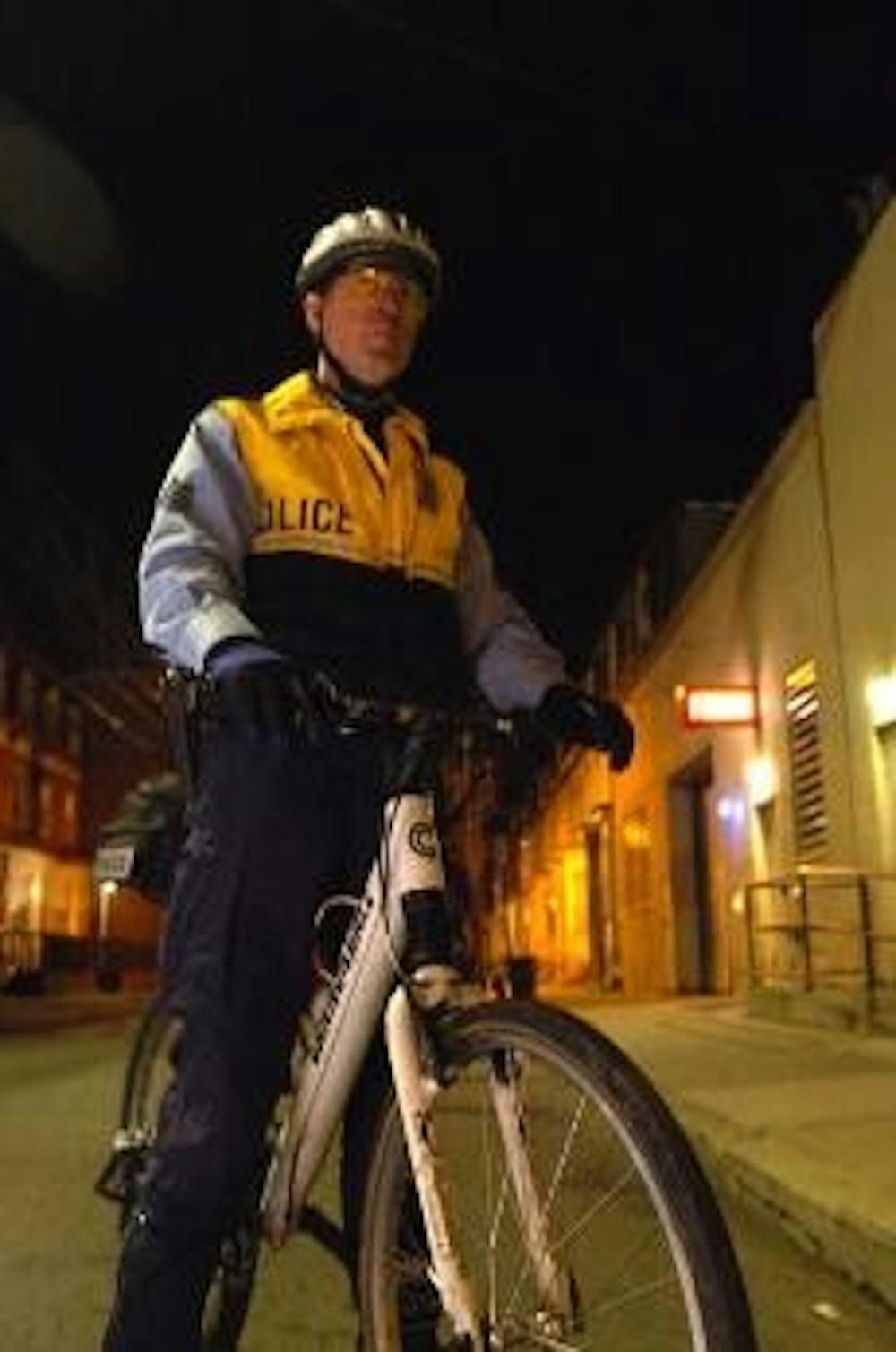
Penn also introduced bicycle policing to the city in 1991, and this tactic was quickly copied by the Philadelphia Police. Though bicycle policing is especially useful on a college campus, where there are so many pedestrian zones, officers say it has important applications in the city as a whole as well.
"You're much more accessible," Sgt. John Washington of Penn's bicycle police unit said. "You can stop and talk to a storekeeper and check what's going on."
Penn's success in making itself an area of low crime is partly because Penn is able to take the initiative in ways that the city isn't able to.
"We're a little bit more progressed than the city of Philadelphia," Washington said, adding that "we've not got the bureaucracy" that may prohibit the city from making moves quickly.
Overall, Criminology professor Lawrence Sherman said the innovations of Penn policing have had a beneficial effect on the city and could be seen, "in some ways, as a model for the city."
"If the whole city followed that template," Sherman said, "there's a good chance we could have less crime."

