Consider the following quotes, all of which were said by players and coaches involved in games in the Palestra this weekend:
Tim Begley, after scoring 29 points against La Salle: "For us to win games, everybody's got to show up and make shots, and I think that's what they did."
La Salle coach John Giannini, after losing to Penn, 78-67: "To Penn's credit, and our fault, a number of Begley's shots were wide open."
Villanova coach Jay Wright, after losing to Temple, 53-52: "Early we took good shots; then I think we got a little hesitant because we weren't making them."
Temple coach John Chaney, after the same game: "We're not good shooters -- we need to see a lot of trips up and down the floor. Even if they are empty trips, we need to see them."
Drexel coach Bruiser Flint, after the Dragons beat Saint Joseph's, 57-49: "Our whole thing was not to let them shoot three-point shots."
Hawks coach Phil Martelli: "We're predicated on the three."
I realize this is stating the obvious, but after watching four games in two days, I have to say it -- teams that make shots win basketball games.
It seems like an incredibly simple premise, but it's the truth. And it bears repeating because all four teams that won their games made the shots that they had to make to come out on top.
On Saturday, the six city teams shot a combined 39.8 percent from the field. They took 324 shots and made 129.
Penn, Temple and Drexel made 41 percent of their field goal attempts, while La Salle, Villanova and Saint Joseph's shot 38.6 percent.
Again, it seems so simple, but the first three of those teams won. And considering how close all three games were, that 2.4 percent difference meant quite a lot.
I suspect that it will take some time for Villanova to live down the fact that it shot 3-for-17 from three-point range in the first half. The Wildcats missed their first five shots from behind the arc, and after Randy Foye got their first basket of the game they proceeded to miss seven more.
Palestra games are usually defensive affairs, though -- especially when Temple's renowned matchup zone is in full swing. And both Wright and Chaney seemed to accept that.
"They just played Temple basketball better than we played Villanova basketball," Wright said. "We tried to throw everything at them we had and they threw everything at us they had."
Chaney has seen who knows how many of these kinds of games in his long and legendary career.
"I see all the big time schools, and they have 150 at halftime, and you say, Jesus Christ, we could never get that," he said. "I don't care what team plays the big time guys here. You're going to see a low-scoring game -- bet on it."
Now maybe that's because Temple has had shooting problems for a couple of years now. Last season, there was genuine surprise when anybody other than David Hawkins scored for the Owls. But in Dustin Salisbery and Mark Tyndale, Temple finally has some new weapons from outside that might just deliver them to the NCAA Tournament this year if all goes well.
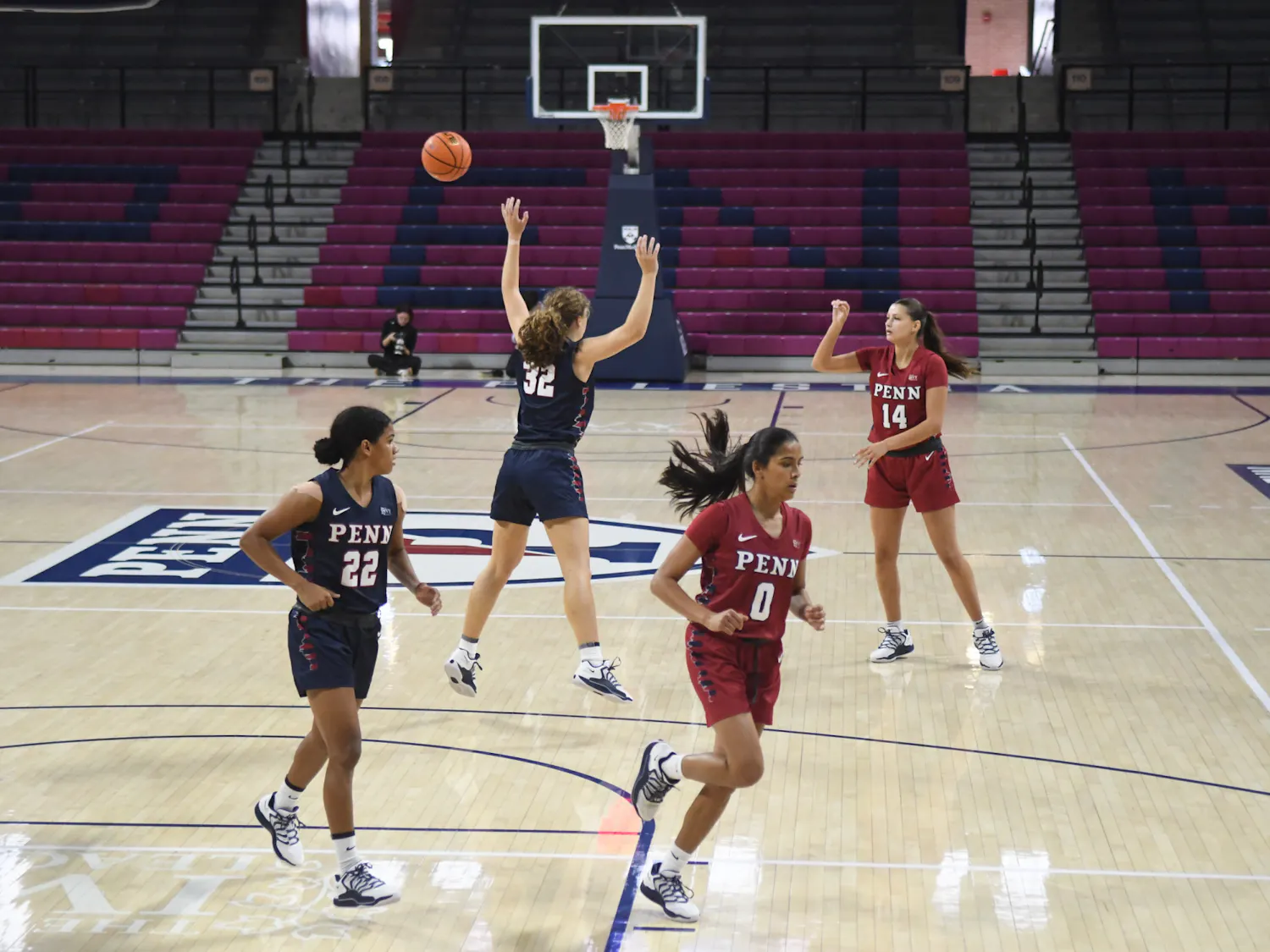
On Sunday, the Villanova women did what the Wildcats' men could not. They shot 35.8 percent from the field and 44 percent from three-point range, while Penn made only 32.7 percent of its field goals and 22.2 percent of its threes.
It should come as no surprise, then, that Villanova beat Penn, 69-44. The visitors established a double-digit lead just under nine minutes into the game, made five threes in the first half and held Penn to only two three-pointers on nine attempts.
"It gives you confidence," Wildcats coach Harry Perretta said. "[Saturday], if Villanova made two or three early threes, they probably win the game."
You have to wonder how many Wildcats fans left after Salisbery's game-winning shot -- a three-pointer, no less -- muttering, "If we had only made one more ..."
It seems so simple, doesn't it?
Jonathan Tannenwald is a junior Urban Studies major from Washington, D.C. His e-mail address is jtannenw@sas.upenn.edu.