Some may think it's crazy that one of the most historic college sports campuses in the country never sees a profit.
However, this is the story of the Penn Athletic Department, which controls the likes of the most popular track and field event in the country, the first two-tier college football stadium in U.S history and a basketball arena that has endless volumes of literature devoted to its praise.
"Not only doesn't [making a profit] happen, but I don't think anyone expects that to happen," Ivy Group Executive Director Jeff Orleans said.
As large as the hordes of fans are outside the Palestra every game night and the Penn Relays every spring, ticket sales, program vendors and concessions are just a small piece of the pie of Penn's athletic finances.
The largest source of funding for athletics is the University administration -- which accounts for about 56 percent of athletic revenue -- coming in the form of "subvention support," according to Jim Mesisca, director of fiscal operations for Penn Athletics.
This figure matches the average administrative revenue support for Division I-AA teams.
The administration money, which "increases incrementally each year," is not allocated to any particular team, but instead goes toward balancing the overall department budget.
Other sources of revenue include "department-generated income" -- such as ticket sales, marketing dollars and development fundraising efforts -- and miscellaneous sources such as program sales, merchandise and concessions that "help balance our bottom line," Mesisca said.
These revenue sources are "income, but when balancing against the spending, it's not net income," but is instead just used to "offset" the administrative funding, Orleans said.
Penn Athletics is so reliant on College Hall for multiple reasons.
The inherent nature of Division I-AA and Ivy League status prevents Penn from attracting marquee athletes because it does not give out athletic scholarships, therefore not opening up the same television and corporate sponsorships that are available to Division I-A teams.
In addition, the Ivy League has instituted legislation since the 1950s that makes athletic programs run more like academic entities as opposed to profit-driven commercial units.
"For the Ivy League, the philosophy is on de-emphasis," Penn Athletic Director Steve Bilsky said. "The core value is that athletics should be an intricate part of the university education and therefore should be funded by the same resources that fund all units of the institution.
"The product is that the school [athletic department] would not be reliant on becoming self-sufficient."
Bilsky also said that another Ivy League goal is to ensure financial aid to students based on need and not merit, which prevents Ivy schools from awarding athletic scholarships.
"We don't want athletics to be run to make profit or run by dollars," he said.
This philosophy of promoting the educational value of athletics makes Penn Athletics' final figures even more surprising.
While sources told The Daily Pennsylvanian that Division I-AA schools average $4.5 million annual revenue, Penn raked in a hair under $8.1 million from June 2002 to June 2003.
Men's athletic programs account for 60.2 percent of that revenue, with football and basketball at 19.6 percent and 11.2 percent of the total revenue, respectively.
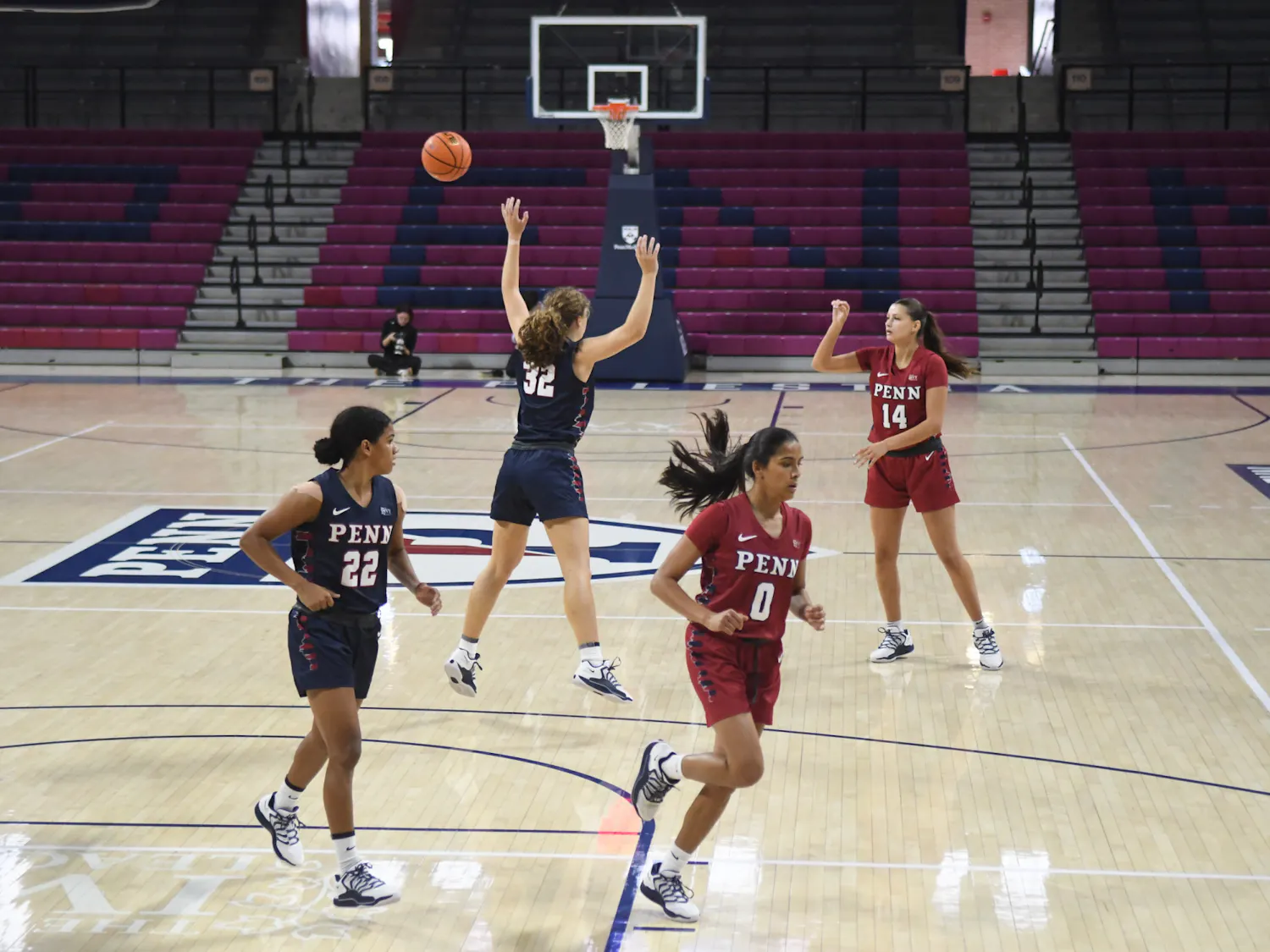
The top grossing women's team is the varsity basketball squad, which brought in about $445,000 even without charging for tickets last year.
The only source of revenue that goes to a particular Penn team is donations specifically named to that program -- even advertising dollars from particular venues and ticket sales just go to support the entire Athletics Department and to help lighten the financial load.
With this money, Penn Athletics is responsible for providing staff compensation, "allocated costs," which go to maintaining facilities upkeep and public safety and "programming costs," such as team travel, recruiting and brochure production.
While multiple Penn programs have endowments specifically for coach salaries, Orleans said that the size of that endowment does not affect the size of the coach's salary.
Mesisca also noted that the popularity and "marketing clout" of a given sports team is not a factor in determining a coach's salary.
According to a Penn report, Penn spends a little over $2.7 million in coaches' salaries, $2 million in operating expenses and $432,000 for recruiting.
Penn Athletics' overall expenses total $8.03 million, approximately $1.2 million more than the average Division I-AA program.
This leaves Penn with a $60,667 "profit" including administrative support, which makes it an exception to the rule -- of Division I-AA schools, a reported 70 percent of programs with a men's basketball team lose money, while only 22 schools with football squads make a profit.
The Penn Relays is quite the golden egg for the Athletic Department -- even after paying for operating costs, personnel, security and room and board for all the participants, the track and field event still earns about $250,000 in profit.
Making money is difficult even for a Division I-A program -- sources told the DP that only 40 schools made profits in 2002.
"If anyone is being truthful about how much money they spend, there isn't anybody making money on college sports," said William Friday, chairman of the Knight Commission on Athletics.
Given that millions of administration dollars are required to keep the department afloat and that a true profit can never be seen, Penn Athletics appears to be a less than desirable investment from a business standpoint.
However, the intangible returns on this million-dollar student activity are too valuable to even consider wiping it from existence.
"A Penn athletic event is a rallying point," said Audrey Schnur, Penn Athletics' director of development. "It's an event where people can come together, have good memories and cheer for something Penn.
"We're an Ivy League school, so we believe in the well-rounded student."
"There are intrinsic values attached to it that are more than what you see on a spreadsheet," Mesisca said. "It's part of the overall student body experience in terms of what it does for the participants, spectators and the University in general."