

Charges against each of the five Penn students accused of assaulting a Princeton debate team member were either dropped or reduced last week in Philadelphia Municipal Court based largely on the offenders' lack of prior criminal records and consultation with the victim, according to the District Attorney's office. "Based on further investigation by our office and based on the facts of the case reported by the victim and the eyewitness," Assistant District Attorney Nathan Cohen explained, "that was the appropriate disposition -- that we withdraw the charges against the three." The students, College freshmen David Hochfelder and Philip Balderston, College sophomore Thomas Bispham Jr., Wharton sophomore Tavraj Banga and College senior Steven Stolk, were originally facing felony charges for aggravated assault, in addition to misdemeanor charges for simple assault, reckless endangerment of another person's life, terroristic threats and conspiracy to commit a crime. Three of the students, Balderston, Banga and Stolk, had all the charges against them dropped, while the other two had only the felonious aggravated assault charge dropped. The two have agreed to complete a pre-trial probationary program for the misdemeanor charges. For Bispham and Hochfelder, the charges have been remanded pending successful completion of the pre-probationary program called Accelerated Rehabilitation Disposition. If the students complete this program, all of the remaining charges will be entirely wiped from their records. "It's ordinary that, in a case where defendants have no prior record, they are eligible for the ARD program," Cohen said. "But in any case eligible for ARD where there is a victim, the victim is consulted before going ahead." In this case, Princeton debate team member John Brantl agreed with the DA's office that ARD is a good option, so the DA's office pursued it. Entrance into the program is contingent on the offenders having clean records otherwise and currently being charged only with misdemeanors, not felonies. If an offender fails to complete the terms of the program, he or she must return to court on the criminal charges and go through the full criminal process. The DA's office has not yet determined what terms it will seek for this particular ARD, but it will do so before March 7, when the two students are scheduled to appear before a judge for this reason. "The defendants may have to attend counseling, pay a fine or restitution to the victim or any number of other things," Cohen said. "The exact requirements haven't been drawn out yet." Additionally, no period of time has been yet decided for the probationary period, but the DA's office generally seeks 18 months, according to Cohen. If the students fail to follow through on the ARD, it is unknown what sort of criminal punishment they might face if convicted. Cohen said that punishments are "hard to predict; it would be up to the judge. "A recommended sentence would be based on specific facts and specific record."
The Daily Pennsylvanian is an independent, student-run newspaper. Please consider making a donation to support the coverage that shapes the University. Your generosity ensures a future of strong journalism at Penn.
DonateMore Like This

Penn graduate Luigi Mangione pleads guilty in federal court
By
James Wan
·
2 days ago

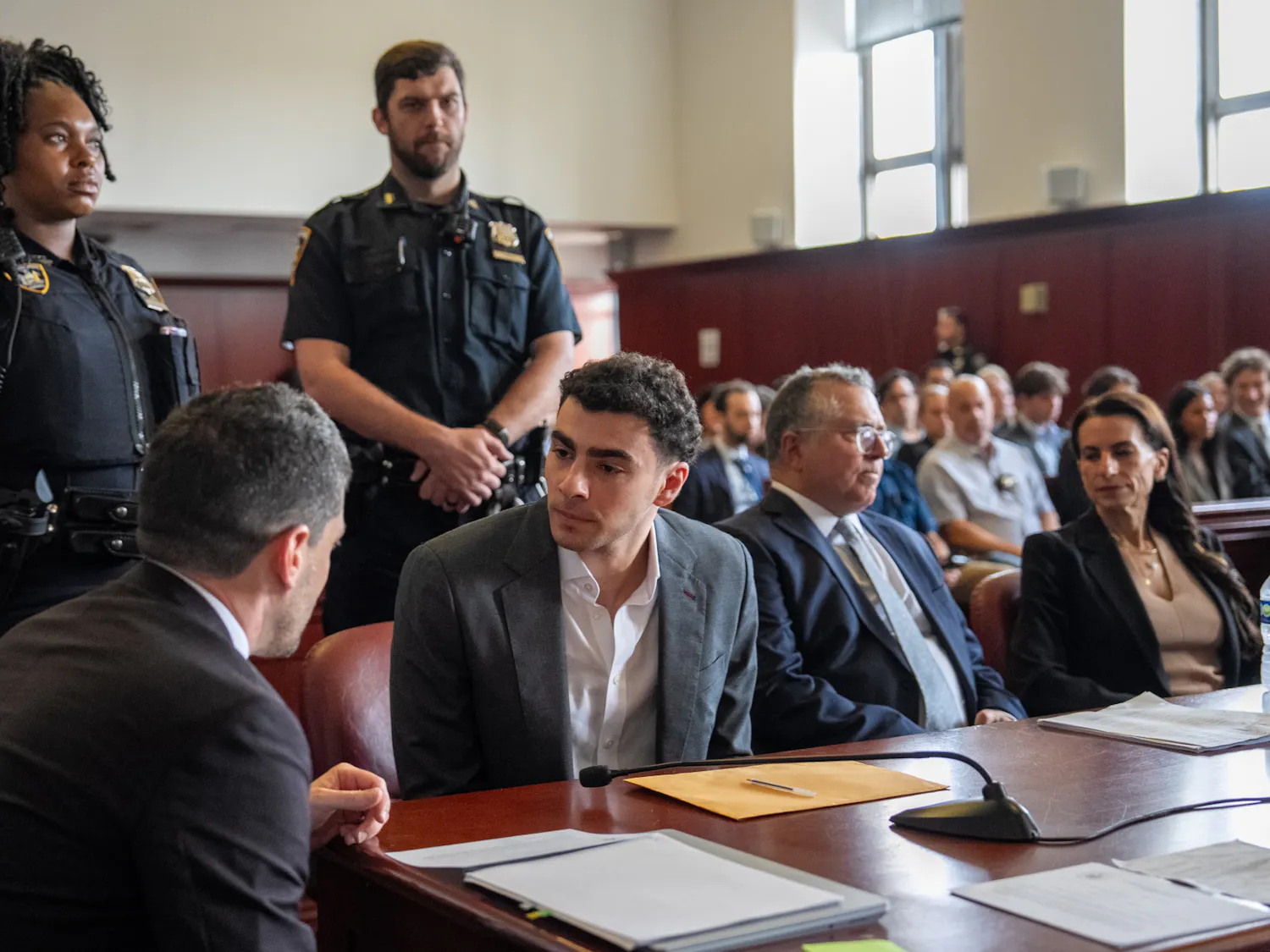
Penn graduate Luigi Mangione expected to plead guilty in federal court
By
James Wan
·
Aug. 13, 2026

Penn to name advisory committee for presidential search
By
Arti Jain
·
Aug. 10, 2026

Wharton club hosts annual high school business competition in Korea
By
Yu Jin Yi
·
Aug. 10, 2026


