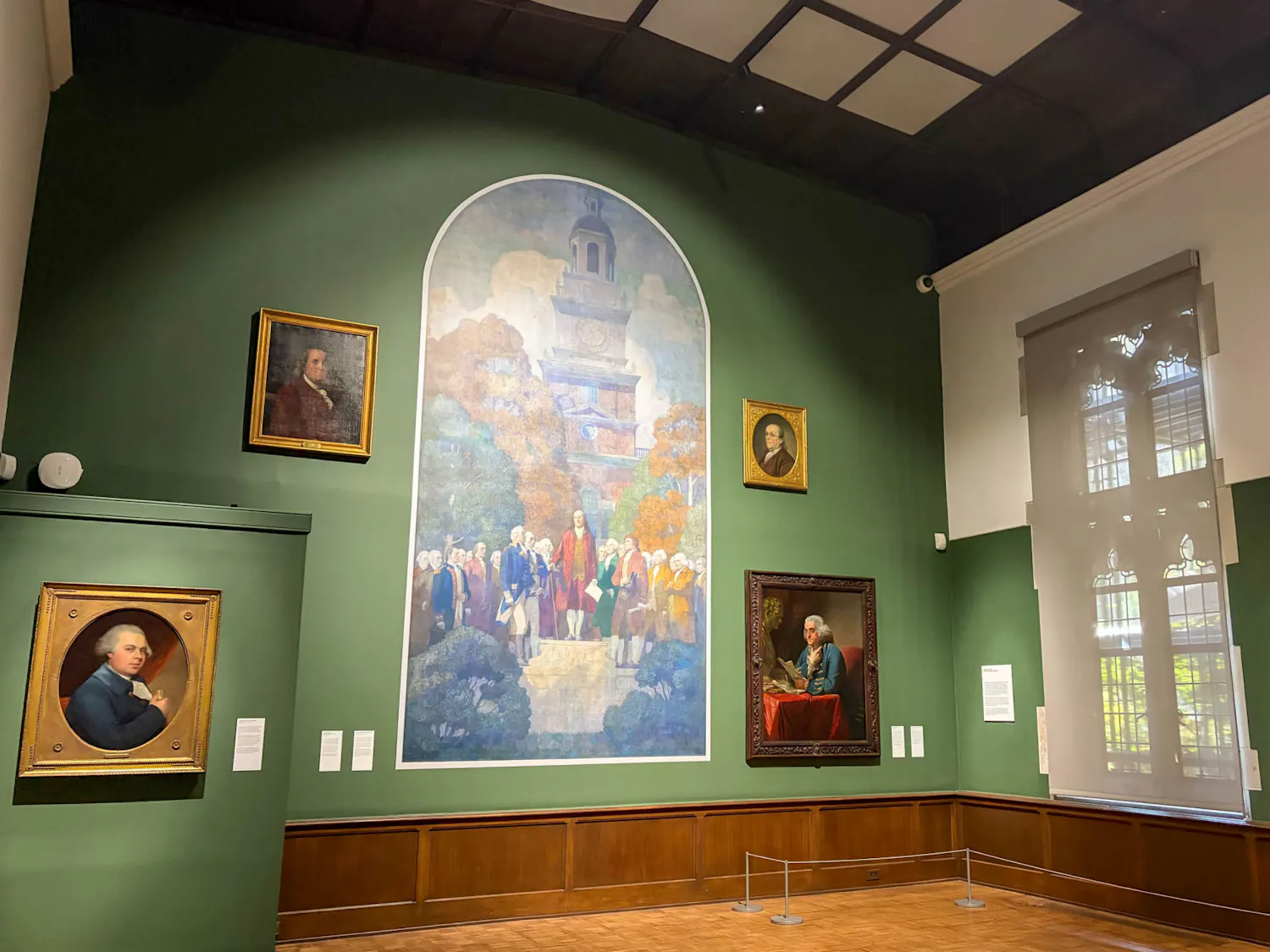
It seemed appropriate that Benjamin Franklin's portrait smiled down on a group of pre-med students who gathered in Houston Hall Tuesday night. The students assembled to hear a representative from the National Health Service Corps speak about two unique scholarship programs. The NHSC scholarship program offers tuition, fees, books, supplies and equipment to qualifying students for up to four years of education, according to program literature. In return, students must provide medical assistance in a health care deficient area, explained the speaker Dennis Day, a NHSC regional program consultant. Students must serve one year for every year they receive scholarship money. The minimum service obligation is two years. Acceptance to the program is based on an application and interview process. The second program, the Loan Repayment Program, was also instituted in order to find ways to assist medical students and support the less fortunate members of society. As part of the second program, students can apply after they have finished all their medical schooling and do not have to experience the rigorous application process. This program is different from the first because, although a student must commit to the minimum of two years, he or she does not have to fulfill this promise until the student finds a secure job. Each student is paid $25,000 for his first two years of service and $35,000 for his second two years. The program participant also earns an individual salary. Dey explained that most of the people in these communities are poor, uneducated and untrusting. "One must earn their trust -- it is not an easy job," he said. College of General Studies student Anu Sharma, president of the University's chapter of the American Medical Student Association said she invited Dey because students have financial concerns and want to aid people who cannot help themselves. "People are worried about money for medical school and are interested in primary care," said Sharma. The agency is looking for committment from students who are culturally sensitive and competent, Dey told the students. "If you are looking at this program just for the money do not waste your time," Dey said. "This is not the program for you." Many students attending the discussion had favorable opinions of the programs. "The NHSC scholarship program seems like it will be paying me to do something I already want to do, how could I turn that down?" said post-baccalaureate student Laura Calmos. "I am very interested in community medicine," said post-baccalaureate student Tom Dilling. "The NHSC program appeals to me the most because it is an opportunity to work with people who are very needy." The NHSC is a federal agency established in 1970, with the purpose of recruiting public health providers to rural and urban areas which have trouble attracting health professionals.
The Daily Pennsylvanian is an independent, student-run newspaper. Please consider making a donation to support the coverage that shapes the University. Your generosity ensures a future of strong journalism at Penn.
Donate