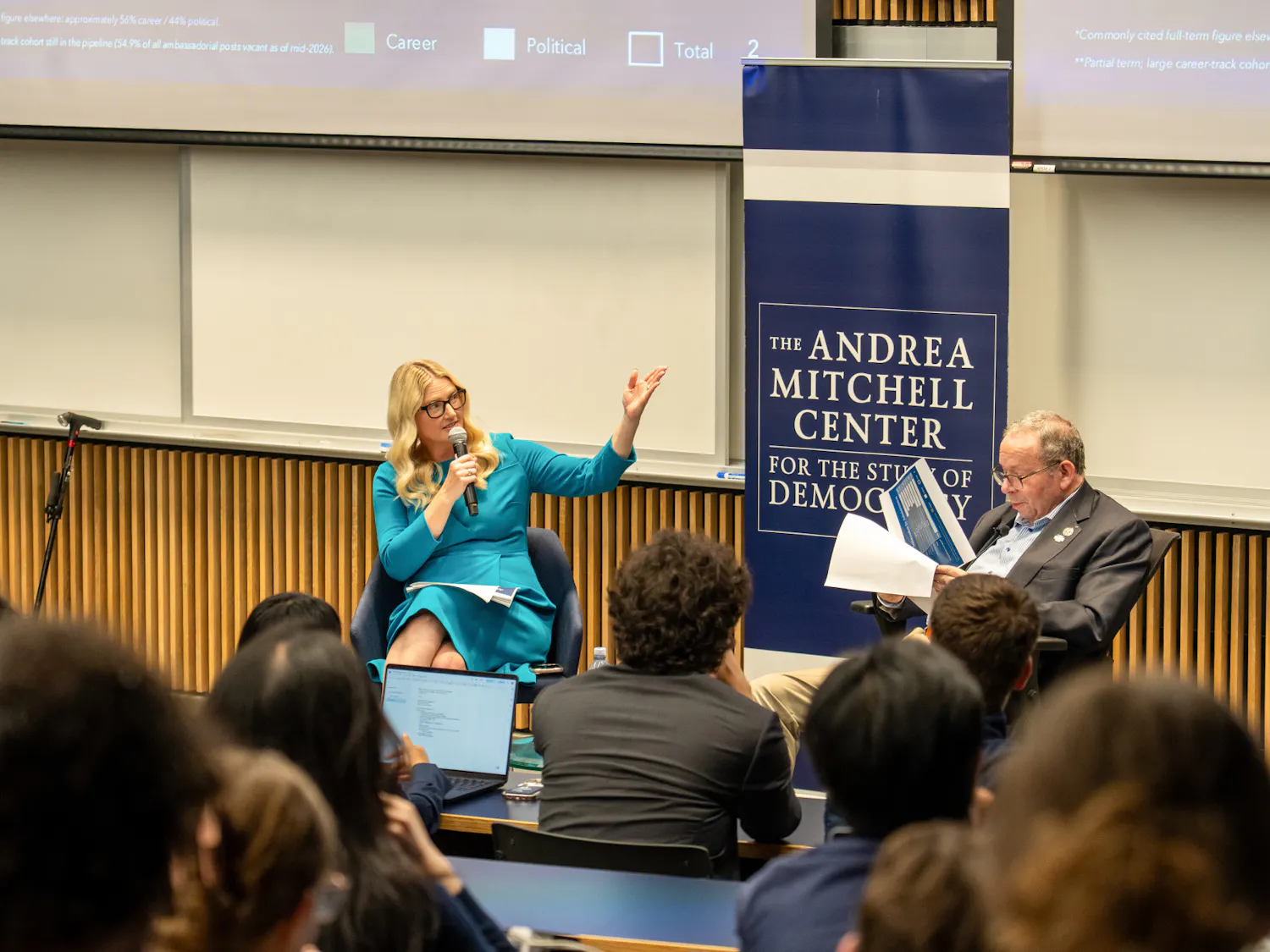
At the first of a series of six discussions exploring employment in the field of science, Research Assistant Professor Jacqueline Tanaka and representatives from CPPS spoke about alternatives to academic careers last Friday. Speaking to about 50 graduate students and post-doctoral candidates, Tanaka, Mary Heiberger, associate director of the Career Planning and Placement Service, and Julie Vick, CPPS graduate placement counselor, tried to inform the audience about possible research opportunities outside academia. Since the job market is extremely competitive, the organizers of the seminar said they were concerned that the graduate and post-doctoral students would leave the University without adequate knowledge about employment choices open to them. "Students aren't told what is available and are left to fend for themselves," Tanaka said. Competition for research funds has increased, because while the amount of money devoted to scientific research has grown in constant dollars from $8 billion in 1960 to $21 billion in 1990, the number of researchers has grown by 60 percent from 1977 to 1987. The series of lunch time lectures, which is co-sponsored by the Institute of Neurological Science and CPPS, aims to provide students with information on career alternatives and to increase the use of the resources available at CPPS, which includes data on a wide range of jobs. The organizers stressed, however, that they are suggesting non-academic careers as alternatives, not as replacements. "Research will remain a good option for a lot of people," Heiberger said. "But there are alternatives out there. Students often ask us about them and we wanted to address their questions more systematically." Tanaka said she hopes to help young graduates confront issues not addressed in the curriculum with input from people who have already established themselves in non-academic careers. Not only will there be alumni speakers at the brown bag lunches, but CPPS also has an extensive alumni network available for the students' use. The discussions have been designed to be informal and there will be opportunities for the students to interact with the speakers. Most of the students who attended were in the science field but there were a few engineers present. The next discussion, which will focus on biotechnology in the Delaware Valley, will be offered February 7 at noon in room 140 of the Johnson Building.
The Daily Pennsylvanian is an independent, student-run newspaper. Please consider making a donation to support the coverage that shapes the University. Your generosity ensures a future of strong journalism at Penn.
Donate