

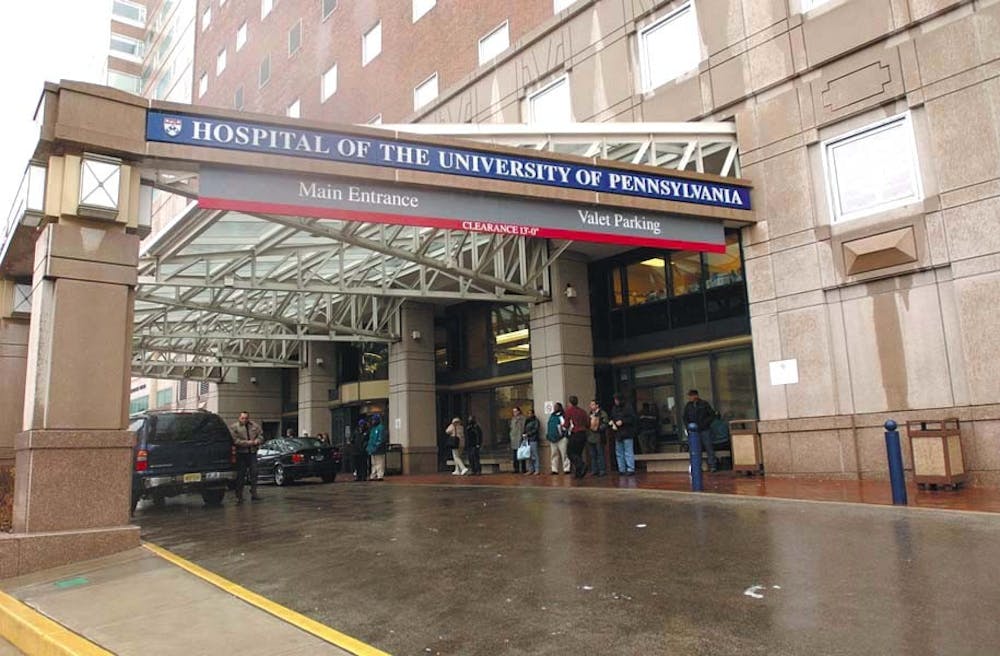
The Hospital of the University of Pennsylvania, in partnership with the Children’s Hospital of Philadelphia, has received a $2 million grant from the Department of Defense to develop advanced transplantation.
The grant is the first ever peer-reviewed grant for such research at Penn, according to Perelman School of Medicine doctor and chair of orthopaedic surgery L. Scott Levin. The team deals with the highly-specialized field of vascularized composite allotransplantation — known as VCA — in which multiple tissues are transplanted as a unit, such as a hand or face transplant.
Related: United States Military finances building of unmanned helicopters at SEAS
Their main goal, Levin said, is to understand the role of T-regulatory cells in advanced transplant rejections. The research hopes to minimize the risks of drugs taken to prevent rejection to “broaden the application of VCA for all patients with traumatic injuries,” he added.
Over the last 10 years, over 90 patients worldwide have undergone VCA procedures, according to the American Society of Transplantation. Of the 90, 46 patients received 66 hand transplants and 17 patients received face transplants.
Related: $7.5 million Med School grant will go to breast cancer technology
In fall 2011, HUP performed the first bilateral hand transplant in the region — the hospital’s first exploration into VCA. The recipient had to have all four of her limbs amputated after a post-surgery infection five years before the transplant. The transplant performed at HUP was successful.
Related: City’s first transplant house to open at Penn
The $2 million grant is part of a $9.3 million consortium led by researchers at Emory University and funded by the Department of Defense’s Clinical and Rehabilitative Medicine Research Program. Emory, The Scripps Research Institute and the University of Maryland are among other institutions awarded grants under the consortium. All grants aim to further research in advanced transplants for patients who have suffered severe burns, limb loss and other traumas.
“We have a great team,” Levin said in an email. “It’s an honor to have the Penn VCA program under the umbrella of the transplant institute.”

