

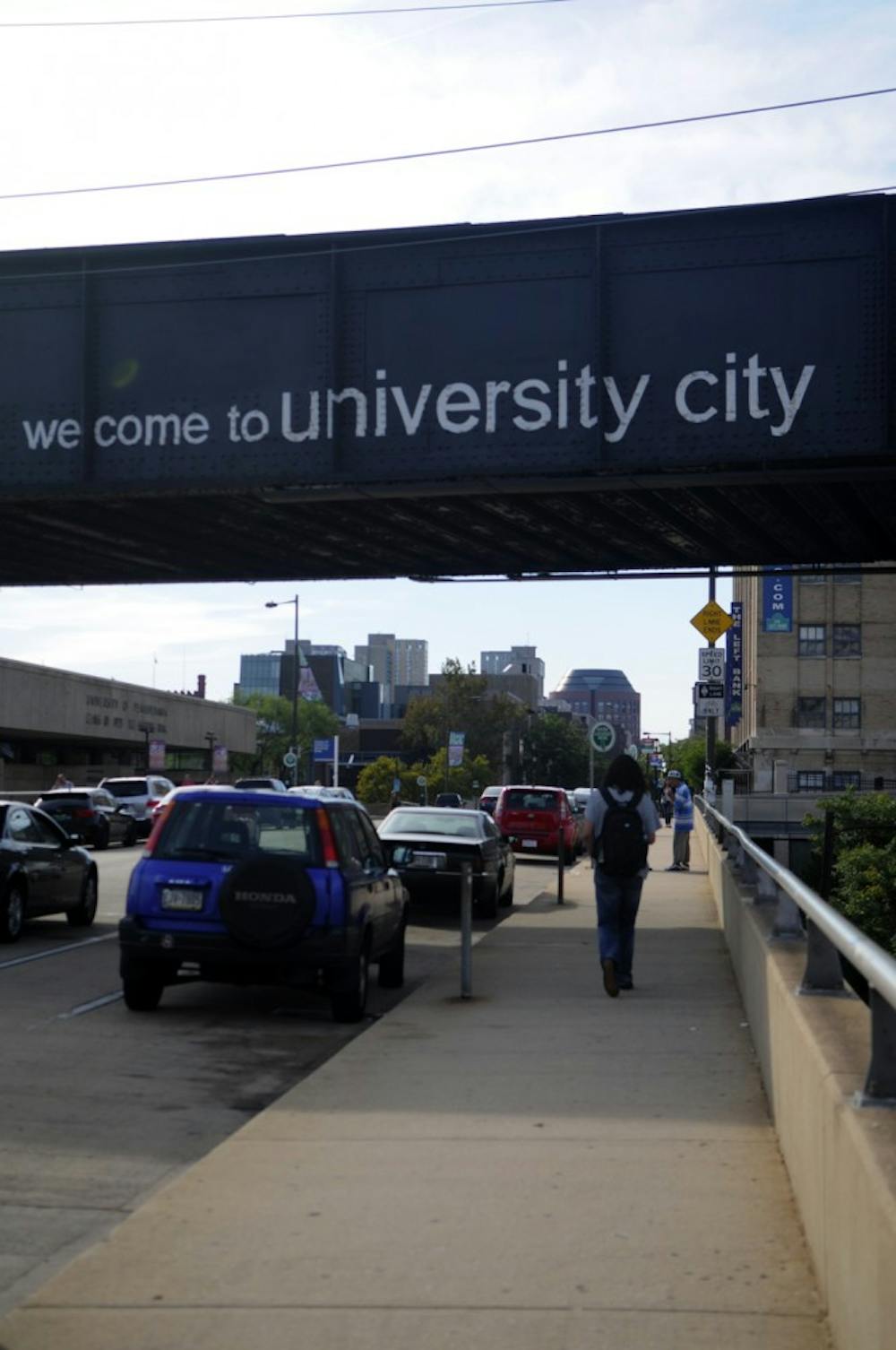
Some time not too long ago, students were wary of traveling west of 40th Street after dark.
The annual “State of University City” report released Sept. 20 by the local nonprofit University City District shows otherwise.
According to the report, not only is University City a safer place, but the neighborhood is quickly becoming an attractive area for commercial, educational and residential development.
This summer, University City has been home to events like the 40th Street Summer Series, University City Dining Days, the grand reopening of Clark Park and the Night Market.
Wharton and College junior Mimi Sheng attended one of UCD’s Baltimore AvenueDollar Strolls over the summer. Once a month, a dozen or so restaurants and businesses along Baltimore offer deals like $1 chicken biscuits and $2 samosas. “It was really fun — it was a good way to see … parts of the city I didn’t get to see before,” Sheng said.
Sheng also tutors regularly for the Financial Literacy Community Project at Lea Elementary School, on 47th and Locust streets. “We walk to [the school]. It’s a really nice walk [and] it’s pretty scenic. I don’t feel like it’s unsafe at all.”
University City also benefits from the three universities — Penn, Drexel and the University of the Sciences in Philadelphia — the Children’s Hospital of Philadelphia and the several medical research centers located in the neighborhood.
“The so-called ‘eds and meds’ in University City District play “a stabilizing role in the economy,” explained Craig Carnaroli, chairman of the University City District Board of Directors and executive vice president at Penn.
Both Penn and Penn Medicine, as well as Drexel, were highlighted in the report.
“What we see now is a lot of vitality in this section of Philadelphia, and that’s what the report is intended to cover. Many of us are anchor institutions to this area,” Carnaroli said.
Upcoming projects Penn is involved with include the creation of the Krishna P. Singh Center for Nanotechnology at 3200 Walnut St. and the rebuilding of a new Wistar Institute, a cancer research and vaccine development center. Penn is also assisting the development of a new public space area near 30th Street Station and across from Penn Park.
“Whether it’s co-producing special events… [or] Penn’s guidance and support in terms of our improvements to the new public space adjacent to 30th Street Station, the role they play in the neighborhood, the city, the region and to UCD is invaluable,” said Lori Brennan, director of Marketing and Communications for University City District.
Carnaroli emphasized the importance of all the University City institutions working together.
“What we’re really seeing in the power of this report is the intersection of the organizations. We’re trying to draw attention to the aggregation of what all of these institutions inUniversity City are doing. We’re like the new city, or an extension of Center City,” Carnaroli said.

