

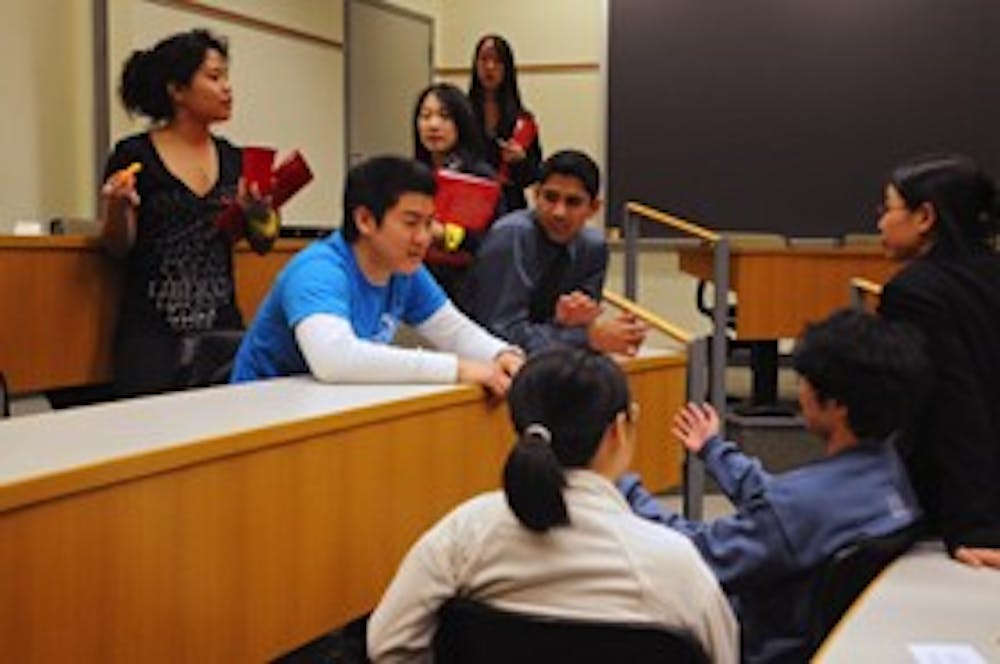
For some students, the stereotypes about Asian Americans feel more pervasive than other stereotypes. The Promoting Enriching Experiences and Relationships group from the Pan Asian-American Community House sought to bring these issues to light Wednesday night at an event titled “Stereotypes and Self-Segregation: Are They Really that Bad?” in Huntsman Hall.
The event started with a talk by history professor Eiichiro Azuma. Instead of addressing current Asian-American identity issues, he put the movement in its historical context. Professor Azuma explained how Asian-American identity is relatively new, owing its existence to the civil rights movements of the 1960s.
Despite having been present in America, especially California, since the middle of the nineteenth century no united Asian identity had existed, he said. He explained that people were more likely to identify themselves by country of origin.
According to Azuma, diverse cultures and peoples ended up lumped together because of American prejudices.
At the same time, he said, college students who wanted to fight the prejudices against during the civil rights movement banded together in this group.
Azuma argued that because of this, the idea of Asian-Americanism was entirely situational.
He said now people are identified as Asian Americans, even if they don’t want to be.
After Azuma’s talk, the room divided up into smaller groups to discuss whether there really was self-segregation on Penn’s campus and whether or not that really mattered.
The groups seemed to all agree that while people may group together, it is mostly because they are just hanging out with their friends. They said, while segregation was not a problem, they did feel that prejudices were. Many of the people present said they felt uncomfortable whenever Asian-American jokes were made, but that they also felt unable to really voice those concerns.

