

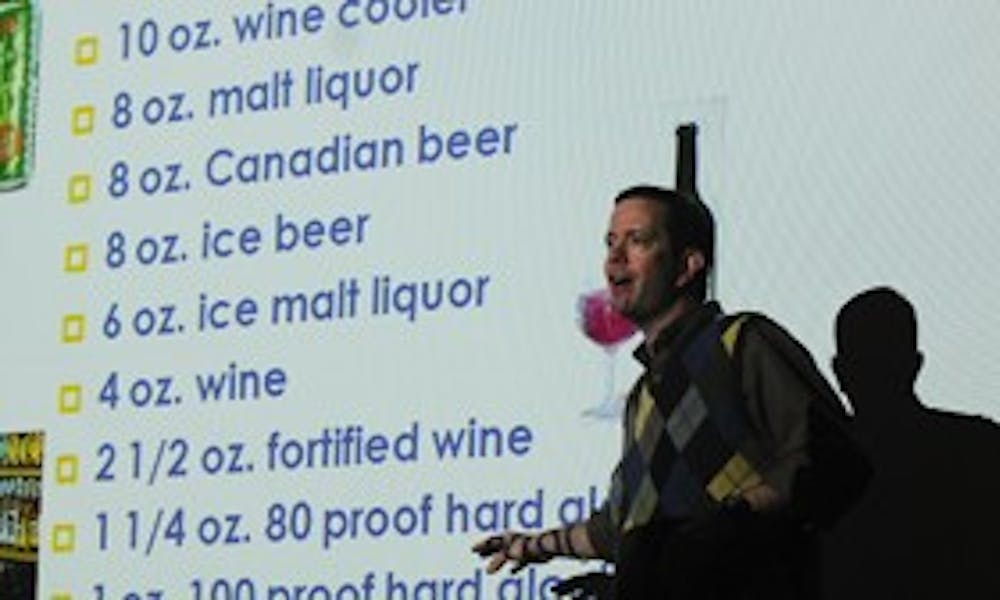
For most students, a presentation about alcohol use on college campuses would not inspire turning off Game 5 of the World Series and braving the chilly wind to head to Meyerson B1. But last night’s discussion was not a typical talk on the effects of alcohol.
Jason Kilmer is a well-known researcher and speaker on alcohol use among college students. Since receiving his Ph.D. in clinical psychology from the University of Washington in 1997, he has continued working there as a fellow researcher in the Behavioral Alcohol Research Laboratory, fondly called BARLab.
He said he was inspired to research alcohol consumption among college students because of BARLab’s attitude toward the subject: don’t encourage consumption — but if you can’t abolish it, advise moderation.
Since then, Kilmer has spoken at universities across the nation and is a member of social programs like Campus Outreach Services and MOST of Us.
The presentation approached college alcohol abuse from a psychological rather than moral perspective. During his research at BARLab, for instance, Kilmer found that students who expected to get alcohol acted drunk, despite never consuming an alcoholic beverage.
Kilmer concluded that many students who drink excessively develop social expectations toward alcohol rather than physical effects from it.
For Julie Lyzinski, director of the Office of Alcohol & Other Drug Program Initiatives and organizer of the event, having Kilmer as a guest speaker was an honor and a privilege. She described him as “our favorite speaker when we went to conferences” who was an “approachable and knowledgeable researcher in the field with a funny and fresh twist” on the topic.
According to students, many attendees were simply curious about the subject and had no real expectations.
“It sounded like an interesting topic and not normally offered in Penn’s curriculum,” said College sophomore Elizabeth Mavromatis.
After the presentation, College freshman Jon Monfred said, “I never knew that there’s a huge psychological component to alcohol.”
With regards to his future study plans, Kilmer said, “we’re doing what we can to find out what methods work and meet the needs of students.”

