

Stevie Wonder’s 1976 song, “Pastime Paradise,” sold one million copies; Coolio’s 1995 song, “Gangsta’s Paradise,” sold seven million. Wonder’s song has 447,000 views on Youtube; Coolio’s has over five million, yet in many ways Coolio’s song strongly parallels Wonder’s.
Yesterday’s screening of “Copyright Criminals,” a documentary produced by Benjamin Franzen and Kembrow McLeod, analyzed this and other instances of music “sampling” — the act of taking a portion of one recording and reusing it in a different song.
The Independent Television Service and WHYY, Philadelphia’s PBS affiliate channel, presented last night’s screening and subsequent panel, which were held at the Rotunda at 4014 Walnut St.
Each month, the ITVS pre-screens documentaries around the country that eventually air on PBS.
“Part of it is to build more buzz and momentum [around] the films,” said Regional Community Cinema Coordinator for Philadelphia Sara Zia, “It’s great to have an opportunity to get the community together and have a dialogue face-to-face about the issues raised in the screening.”
The documentary offers a look at the history and legality of sampling in music, which is intertwined with the history of hip-hop itself and its growth from an underground movement to a mainstream music genre.
Once hip-hop became more mainstream, lawsuits began arising over sampling in hip-hop songs, which could be as much as several verses or as little as a three-bar count of drums. Artists such as N.W.A., Biz Markie and MC Hammer were among those discussed in the documentary, which draws perspective from musicians, DJ’s, producers and lawyers.
The documentary also offers different points of view on music sampling, which some view as “lazy borrowing” of others’ hard work and others view as integral to the evolution of music across time.
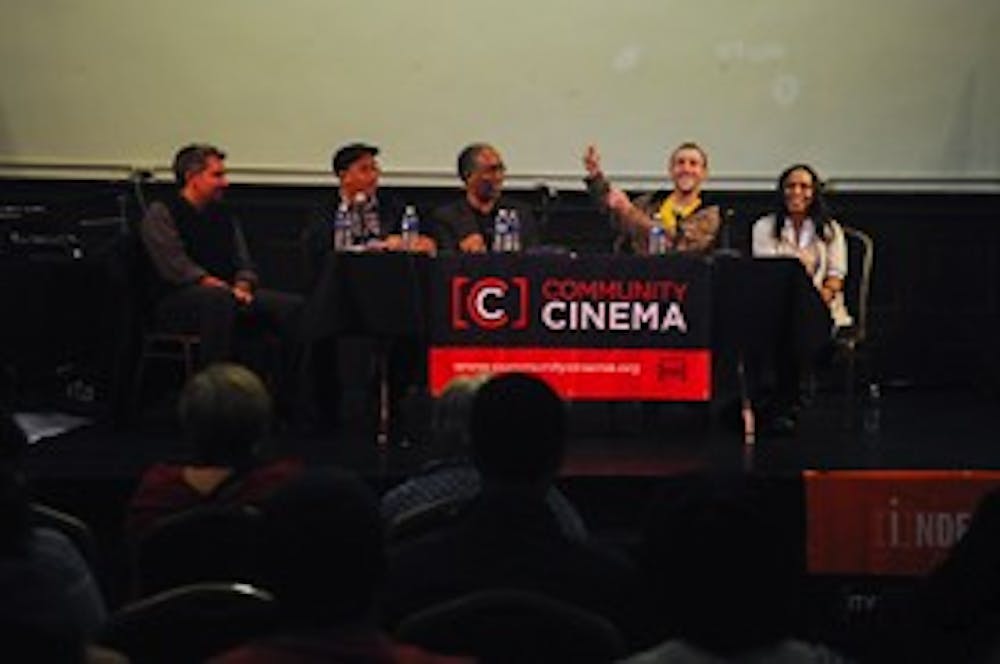
In a panel following the movie, attendees were able to ask questions of the panelists, which included David “Lil’ Dave” Adams, a Philadelphia DJ, Philip Asbury, the senior vice president of Philadephia Records, and Ramble John “rjd2” Krohn, a producer and musician.
The panelists agreed that the strict laws governing sampling in music today sometimes restrict young artists’ creativity.
“It’s hard for art to happen if you’re worrying about the rules,” Adams said.
Panelist Donyale Reavis, an intellectual property attorney and independent film producer, agreed that action needs to be taken in order to “bridge the gap between the reality of the art and where the law actually is.”
The documentary will air in January on WHYY.

