

According to a recently published book, Philadelphia has a glorious past and an uncertain future. However, there is potential for the city to reclaim its former glory.
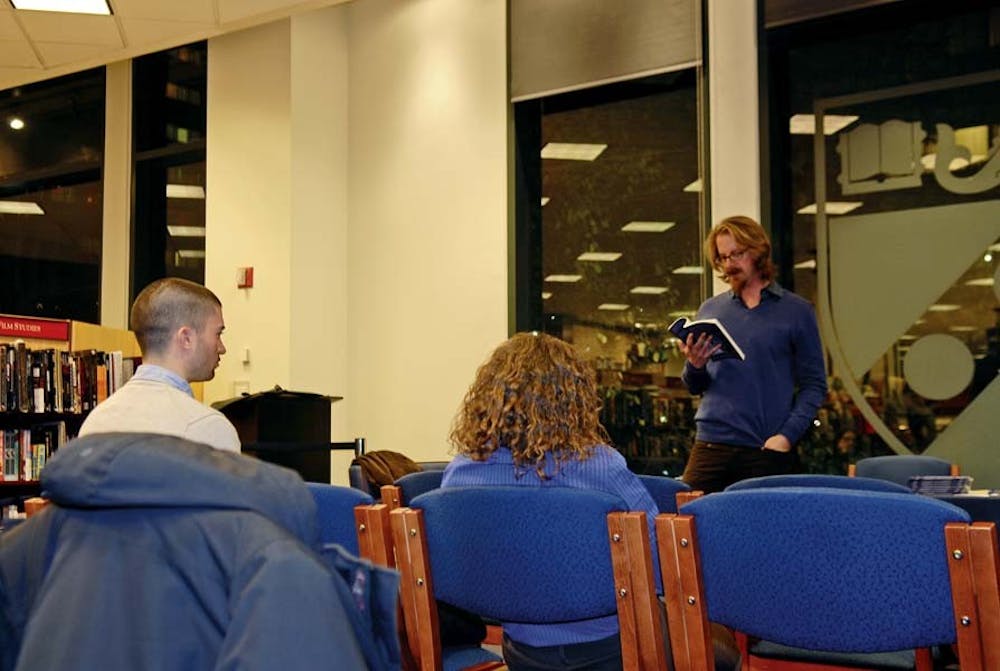
College and Design School alumnus Nathaniel Popkin examined both historic and present-day Philadelphia during the reading of his new book The Possible City: Exercises in Dreaming Philadelphia at the Penn Bookstore last night.
Although his book discusses Philadelphia's future possibilities, Popkin primarily focused on the city's history.
Examining the ideals of Philadelphia's founder William Penn, Popkin described Penn's use of Thomas More's Utopia as a model for the city's founding.
Popkin described Philadelphia as a city struggling with a sense of decline, since it was once the capital of the United States and a great industrial center.
Philadelphia bears the "tremendous weight of loss," Popkin said.
Even so, Popkin's book is not a cut-and-dry academic work; rather, he said it was a "literary project."
When examining the way in which Philadelphia is "living in [the] ruins" of its past glory, he writes poetically about drug dealers coexisting with the remnants of decaying factories.
Popkin also reminded the audience that despite all its current problems, Philadelphia was founded as an "open city" in which Penn "sought not to conquer but to befriend."
During his reading, Popkin did not give explicit recommendations on how to make Philadelphia a "performing" city, which he defined as one that "dazzles and excites as more than just a domicile."
Those in attendance said they found Popkin's unique view refreshing.
Attendee Joe Digiuseppe said he found it "fascinating that [Popkin] sees the city through time."
Digiuseppe, a Philadelphia native, expanded on Popkin's thoughts, adding that he thinks the city's future depends on educated, young families living in the heart of the city.
Another attendee, Vincent Diterlizzi, found "the notion of a burgeoning, changing city very relatable," even though he is not a Philadelphia resident. He also noted that many of his friends in Philadelphia would not "see the city with the same romanticism."
Popkin remained optimistic about the city's future. He heralded Philadelphia for its "tangible, real possibilities" with a "progressive, thoughtful mayor and progressive leadership."

