

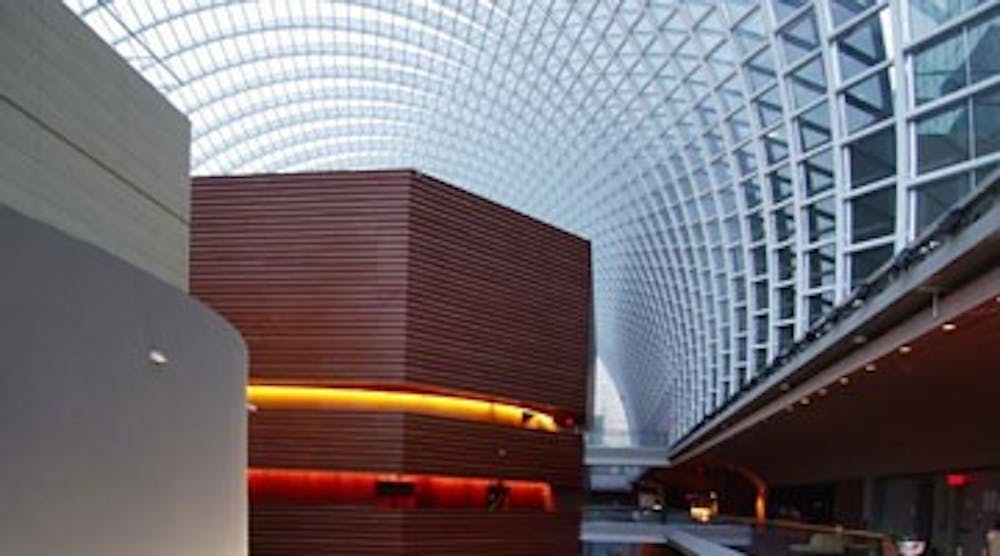
When students from last semester's Graphic Design Practicum course visit the Kimmel Center for the Performing Arts in the future, it may look pretty familiar.
The 12 graphic design and architecture undergraduates spent the spring conceptualizing ways to make the Kimmel Center a more inviting and invigorating public space, and some of their designs are becoming reality.
Last winter, Kimmel Center executives approached PennPraxis - the School of Design's clinical arm that engages faculty and students in practical projects - to help transform the center into the cultural mecca imagined at its 2001 opening.
Students in the interdisciplinary clinic were challenged to put theory into practice with a redesign based on community input.
College senior Aura Seltzer called it a "once-in-a-lifetime project."
The process began with public forums led by Penn's Project on Civic Engagement. People called for a space that welcomes and engages visitors, said PennPraxis city planner Andrew Goodman.
He recalled a revealing common complaint: ticket-holders thought they had arrived at the building on the wrong night because it looked so dark.
Public suggestions guided the students, who split into three groups - Humanize, Connect to the Arts and Sensory Experience - each focused on a different aspect of the space.
Some ideas were simple, such as comfortable seats to invite conversation, and some were far-fetched, like a rock-climbing wall. Other proposals included a second entrance, a central spiral staircase and a sidewalk café.
The class compiled a book of digital renderings that documented the process and outlined recommendations. It is available at planphilly.com
Goodman said an academic studio fosters progressive ideas because students can "think big" without financial constraints.
PennPraxis Executive Director Harris Steinberg, who co-taught the course with fine arts professor Laurie Churchman, added that the "rich, rewarding process" had real-world impact - and real-world pressure.
"It was a real-life client who demanded a lot from us," said College senior Rachel Gogel. "It was the most work I've ever done for a class."
As a fine arts student, she said working with architects was tough at first. Over the semester, each side learned about the other's discipline and how they fit together.
While other students were busy with finals, those in the practicum presented their proposals to the Kimmel Center's executive board and at a public meeting where about 200 citizens responded to the work.
Reactions were "extremely positive," Steinberg said.
What comes next is up to the Kimmel Center, he added, but they are optimistic: the Kimmel Center wants to hire a top-notch, professional architect to create a master plan and, in the meantime, implement some short-term improvements.
"I took a lot away from the course," Gogel said, "and I could be walking down the street and see the idea someone came up with actually installed."

