

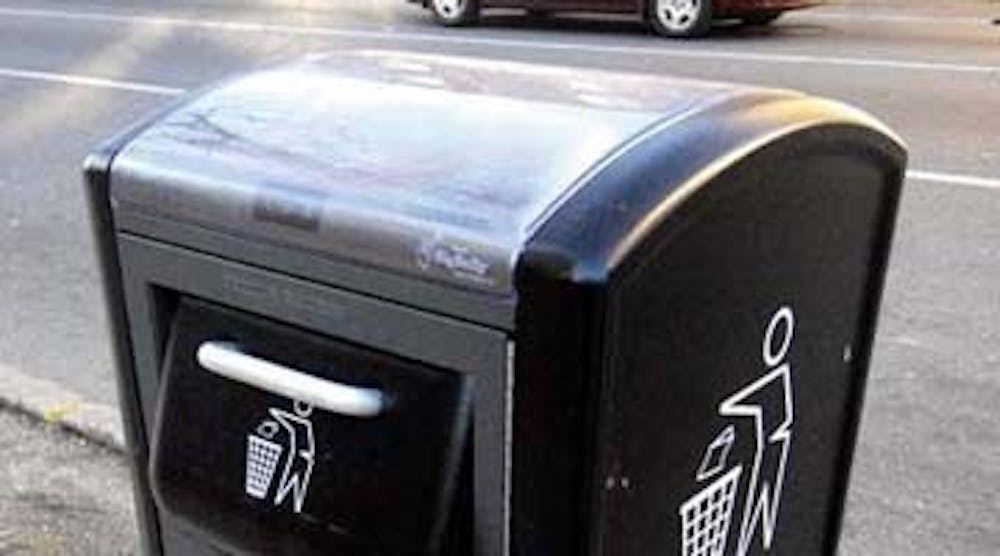
Standing lonely on the corner of 36th and Chestnut streets, the 'Big Belly' looks like any other trash can - barring the solar panels on its top.
The quirky design serves a purpose. Big Belly is the first solar-powered compacting trash can in Philadelphia. And it's got Wi-Fi.
"We'd sometimes have to empty the [conventional] can three or four times a day. Now we can empty the trash three times a week," said Kristyne Kealey, Penn's Urban Park Manger, who takes care of campus cleanup.
The Big Belly harnesses the power of the sun to charge its compactor, which reduces all the trash into a 30-pound lump.
Just one day's worth of sunlight is enough to power the trash can for the rest of the week.
Once it is full, it sends an electronic message to Urban Park Services to indicate it needs to be emptied.
The University was initially approached by Green Building Systems about one and a half years ago to install a solar-powered trash can. After some discussion, Penn purchased a prototype that was installed in late December.
With a Wawa beside it, the corner of 36th and Chestnut streets was often littered with trash and thus became a logical destination for the trash can.
The Big Belly comes with a price tag of about $5,000 including the installation and shipping costs.
Though the cost seems rather high for a mere garbage receptacle, a regular trash can costs about $800 and a triple unit that consists of two recycling bins and a trash can cost up to $2,000.
According to Kealey, instead of sending out workers to pick up trash once or twice a day, she can divert her attention to other matters like keeping the campus cleaner.
It also comes with a set of environmental benefits.
"The trash can reduces greenhouse gases and air pollution," as well as prevents animals from getting in, said Bryan Callahan, who is a representative of Green Building Systems.
Others also see the installation as a bright idea.
"Smart trash cans that can manage the waste while being kept off the grid will help foster the environmental culture at Penn," said Wharton sophomore Laura Boudreau, who is a member of the Penn Environmental Group.
At this point the University and Callahan are in talks for getting more Big Bellies on Penn's campus - but don't expect a total overhaul.
"We're trying to locate the 20 percent of cans that cause 80 percent of the problems," Callahan said. She could not provide a specific time frame for adding more trash cans.

