

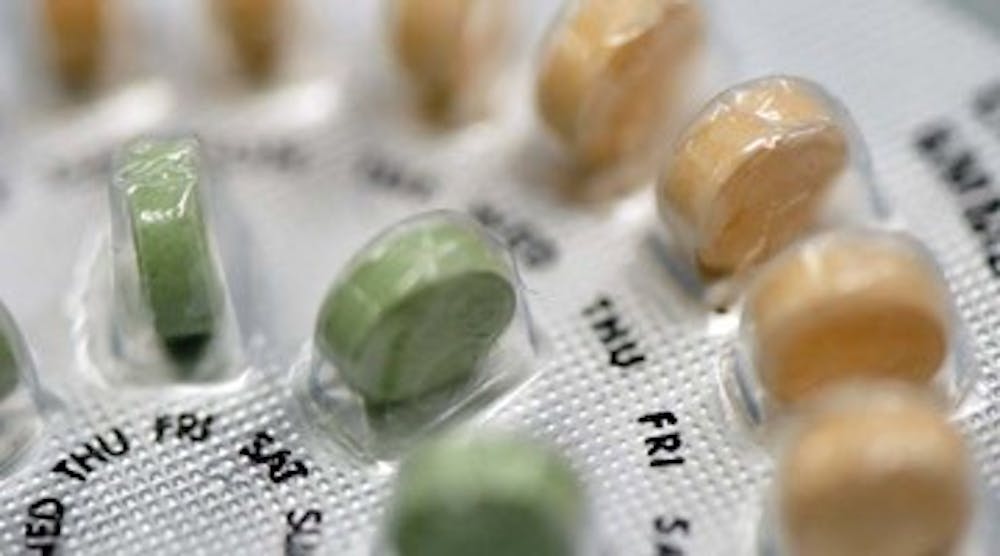
Most women take birth control pills to prevent pregnancy. But Oxford researchers say the pill may prevent ovarian cancer as well.
The study, released last week, confirmed the magnitude of oral contraceptives' effectiveness in reducing the risk of ovarian cancer.
The longer a woman takes the pill, which prevents pregnancy by stopping ovulation, the greater its effectiveness in cancer protection, the report said. The protection also lasts long after a woman stops taking the drug.
Researchers estimate that 200,000 cases of ovarian cancer and 100,000 deaths have already been prevented by oral contraceptives.
"The use of oral contraceptives has been so widespread that I think its effects on the rates of cancer have already been seen," said Stephen Rubin, chief physician for the division of gynecology and oncology at Penn's School of Medicine.
Ovarian cancer is usually aggressive, requires invasive surgery and is often fatal. Mortality rates approached 70 percent in 2007, compared to 23 percent for breast cancer, according to American Cancer Association statistics.
Students said cancer protection is more of an added bonus, rather than an incentive, of taking the pill.
"I think it's great, but it's probably not the reason I would stay on the pill," College senior Kristen Beneduce said.
The Oxford study provides a contrast to others that have questioned the safety of the birth control pill. Several studies have shown that the pill is weakly associated with increased rates of breast and cervical cancer, but the majority have been inconclusive.
"There have been plenty of studies showing that the pill does not increase the risk of cancer," said Jill Stopfer, a genetic counselor at Penn's Abramson Cancer Center. "However, there is one type of pill that we are more worried about than others - the one which prevents [menstruation] cycles."
Oxford's study directly refutes the notion that hormonal drugs increase one's risk of getting cancer.
"I think if you asked the average person on the street what effect they thought the pill has on cancer, they would say it probably raises rates," Rubin said.

