

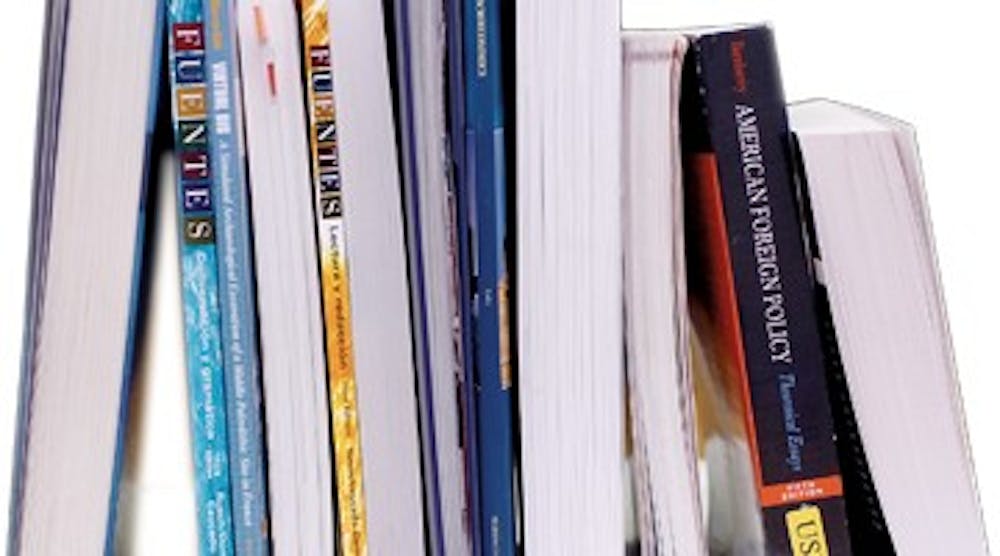
Two years ago, College senior Heather Gorn and Engineering junior Scott Becker started BetterThanTheBookStore.com, an online forum for students to buy and sell textbooks that quickly became a campus institution.
Today the site has about 2,600 users and more than 7,000 books for sale.
The success of the student start-up reflects the momentum of the used book market.
Hurt by high costs - the average student spends $900 per year on books, according to federal reports - many students are buying cheaper, or exchanging books among themselves.
Used books usually cost 25 percent less than new ones, according to the National Association of College Stores.
Business Services Spokeswoman Barbara Lea-Kruger said Penn Bookstore has always offered to buy back and sell used books, but students really started participating in 2004.
And the Penn Book Center, a popular campus bookstore, entered the used book market this year for the first time, according to co-owner Michael Row.
But it turns out the cure for costly books is also a cause.
While used textbooks ease students' financial woes, they also contribute to the high-cost cycle.
"You're saving, but you're also forcing publishers to react," Row said.
Executive Director of Higher Education for the American Association of Publishers Bruce Hildebrand said textbooks take millions of dollars and 3 to 5 years to produce.
Publishers and authors earn nothing from the used book market so publishers are forced to charge prices that will allow them to cover their costs, he said. Prices will increase if fewer books are sold.
The high costs of textbooks took the national stage in 2005 when a Government Accounting Office report attributed soaring prices to trends in bundling textbooks with supplements, such as CDs and workbooks, and releasing frequent new editions.
Some critics say such extras and revisions are unnecessary.
But publishers say they are responding to demand.
Hildebrand said that book supplements expand classroom capabilities and improve performance despite their high cost.
And some professors have totally done away with textbooks.
Statistics professor Paul Shaman said he began opting for faculty-produced packets and online notes instead of books about 20 years ago.
"My motivation was I couldn't find a textbook that I liked," Shaman said. "It had the added benefit of lower cost."
Lea-Kruger and Row said professors can help students save money by ordering books early, which allows time for stores to make used versions available.
Row added that today's textbook business causes headaches for all sides.
"It's not like anybody's making a killing," he said. "It's an all-out war where everybody is losing."

