

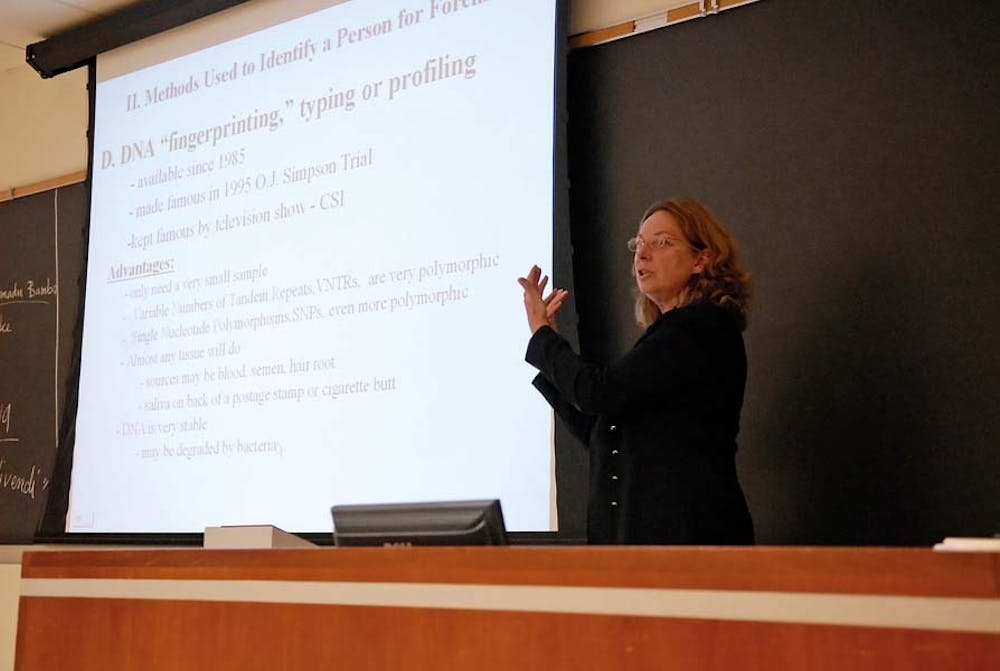
A training program at Penn is bringing nurses out of the hospital and onto the crime scene.
This week at the Nursing School, 42 professional nurses participated in a 15-year-old training program to learn the information and skills necessary to become a Sexual Assault Nurse Examiner.
Simply put, the job of nurse examiners is to collect forensic evidence in cases of sexual assault.
While detectives are out on the actual crime scene, nurse examiners inspect the victim for potential clues.
"The body of the victim is their crime scene," SANE Training Program Director Kathleen Brown said.
Penn Nursing is the sole provider of this type of program in Philadelphia. SANE training is offered once a year.
The 40-hour training - which takes place over the course of five days - includes lectures, guest-speaker presentations and hands-on activities in laboratories.
These types of nurses also identify and document any injuries that may require medical treatment.
Although most injuries do not require medical intervention, they serve as possible evidence to confirm the victim's account that the assault was without consent.
At the end of an examination, nurses submit a patient interview, a forensic evidence collection kit and documentation of any injuries to law enforcement officials.
"All our work is very objective," said Brown, who is also a Nursing professor. "We don't work for the prosecution. We don't work for the defense."
Denise Westbrook, a nurse from Beebe Medical Center in Delaware, joined the program because of her interest in victims of sexual assault and domestic violence.
She said that there is a real need for an increase in this area of nursing.
"Victims would be more likely to come forward if they knew there were specialists in the field," Westbrook said.
One perk of undergoing this training is that nurses are able to increase awareness of these issues in hospitals, Beebe Medical Center nurse Kim Moore said, like recognizing the injuries from domestic violence and knowing to photograph it for later evidence.
Traditionally, this particular work was not a part of the nursing domain but was carried out by physicians and medical residents.
The situation changed in the 1970s when nurses felt that medicine was not doing an adequate job and began to take over the responsibility.
Today, nurses primarily deal with these examinations.
Nurses "are easily available for testifying, whereas residents tend to move on to another location at the end of their residencies," Brown said. "You can count on nurses to be nice people."

