

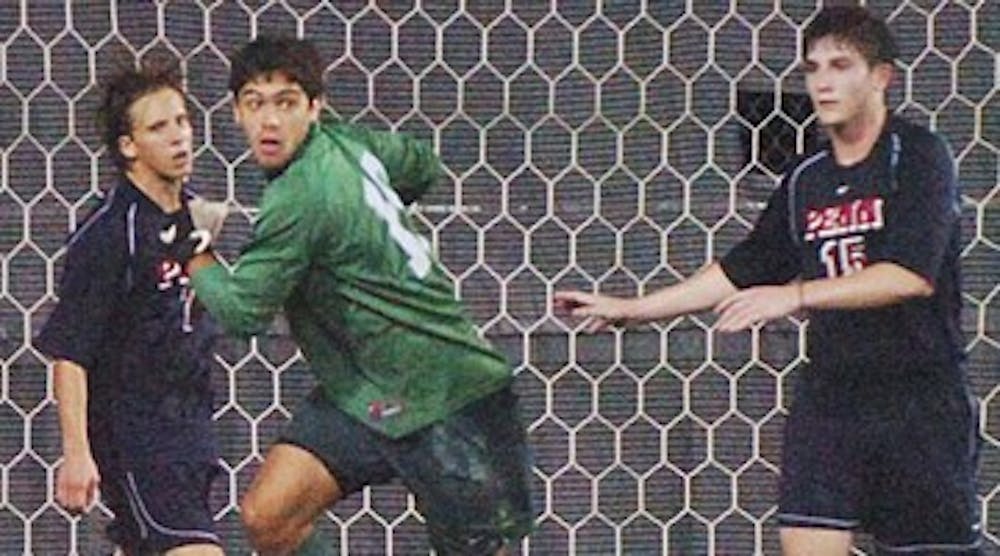
PROVIDENCE, R.I., Oct. 27 - From the very first minute of Saturday night's matchup, Brown was able to assert itself and impose its game on the Quakers. The Bears controlled possession, but more importantly, they controlled the run of play and pace of the game. Here's how they did it:
Midfield pressure. Whether it was on defense or offense, Brown brought an aggressive gameplan emphasizing pressure and attacking with numbers.
Whenever a Penn player would receive a pass over the midfield, the Bears would surround the player and quickly dispossess him. Then they'd turn the assault upfield.
That fast turnaround from defense to offense and the wave of Bears coming forward caught the Quakers' defense flat-footed.
"When they won that ball and came at us, it left us with the decision whether to commit or to hang back," senior defender Keith Vereb said.
Stretching the defense. Off restarts in their own half, the Bears often found it easier to bypass the midfield altogether when mounting a scoring charge.
Penn has had trouble all season with stopping the opponents from playing long balls, from the defense and back midfielders up to the forwards.
But there was a smaller margin for error against Brown, which has one of the most potent forward combinations in the nation. Senior Kevin Davies and junior Dylan Sheehan each have eight goals this season.
According to Vereb, the Bears were playing long balls down the flanks. The attacking midfielder or forward would try to pull the outside defender out and stretch the center of the defense thin to set up crosses into the box.
"We were ready for that and did a good job defending those crosses," Vereb said.
He was right, as only Davies scored. But the ease with which Brown was able to bring the ball up and take restarts deep in Penn's territory allowed them to generate 20 shots (nine on goal).
First and second balls. Bouncing balls and headers are called "50-50s" because, ideally, both teams have an equal shot at them.
On Saturday night, the Bears dominated both of those facets, especially the first and second balls that would come off goal kicks and defensive clears.
Off those goal kicks, Penn was occupied by the busy Brown forwards.
"We were shifting guys around," Vereb said.
So while the Quakers did have their chances with the first header in the midfield, the breaks in their formation allowed Brown to get to the second headers.
From there, the midfielders would chest it down and bring it up for a quick attack.

