

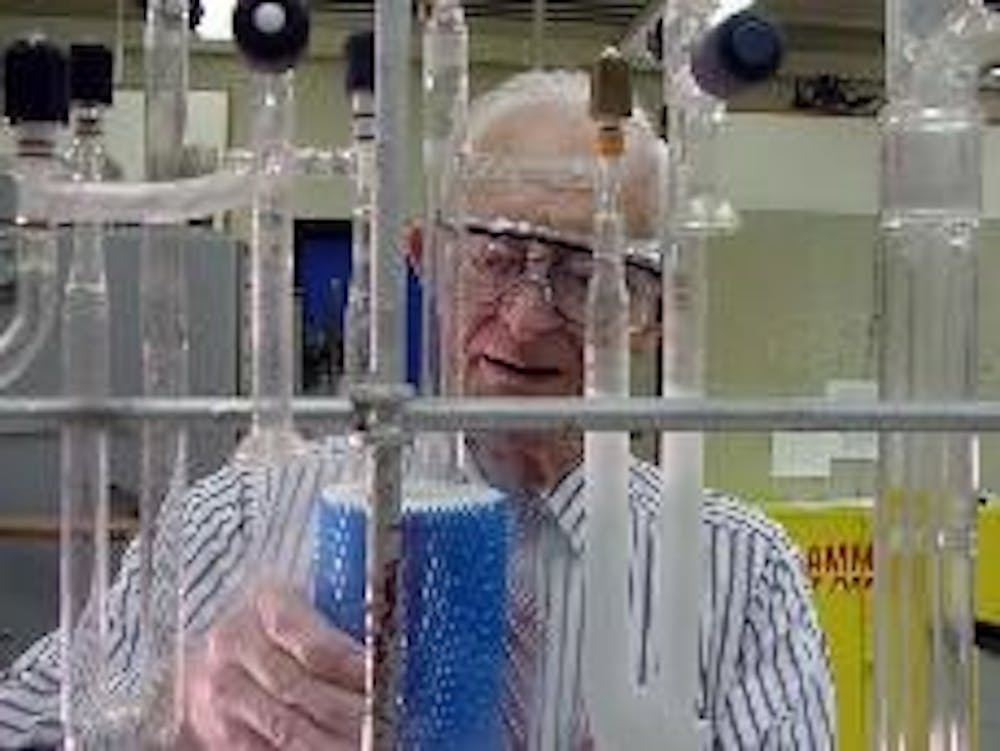
Chemistry professor Alan MacDiarmid, one of three recipients of the 2000 Nobel Prize in Chemistry, died yesterday afternoon.
He was 79.
MacDiarmid had been suffering from Myelodysplastic Syndrome, a disease that affects the bone marrow and blood, for the past four years.
He passed away due to complications relating to the disease after he fell down the stairs of his home in Drexel Hill, a suburb of Philadelphia.
He was rushed to Delaware County Memorial Hospital, where he was pronounced dead at about noon.
Born in Masterton, New Zealand, MacDiarmid is survived by his wife, Gayl, and his four children from an earlier marriage, Heather, Dawn, Duncan and Gail.
MacDiarmid came to the University in 1955 and taught undergraduate and graduate courses specializing in inorganic chemistry until he won the Nobel Prize for his discovery that plastics can be made to conduct electricity.
After receiving the prize, he devoted the majority of his time to his research projects, including a U.S. governtment-sponsored effort in which he tried to find ways to move from a fossil fuel-based economy to one that relies on hydrogen.
MacDiarmid was a "very conscious person," said visiting Chemistry researcher Everaldo Venancio, who had been working closely with MacDiarmid since July 2002.
"He was always wondering about ways of [improving] energy . and poverty around the world," he said.
Venancio also said MacDiarmid was easygoing, calling him "a role model" who taught both in and out of the classroom.
"'You're always learning,' he would say," Venancio added. "Of course, we learned more from him than he did from us."
Venancio recalled one summer afternoon, after he first arrived in Philadelphia, when MacDiarmid took him out for lunch to ease his nerves.
"I was embarrassed," Venancio said. "I'm thinking, oh my God, I'm not dressed up, where is he going to bring me? Then he crossed the street and he went to a [food] truck and ordered two hot dogs."
MacDiarmid and his wife hosted annual picnics for his students at the couple's summer home in the Poconos, Gayl MacDiarmid said.
She described her husband as "charming, gracious and giving - . someone insistent on having things the way he thought they should be."
Colleagues likewise remember MacDiarmid as hard-working, someone who "always lived life to the fullest," said Chemistry Department Chairwoman Marsha Lester.
MacDiarmid was the author of over 600 research papers and established research institutes in both China and New Zealand.
MacDiarmid, University officials said, was humble, even with his impressive resume.
"With Alan's passing, we have lost not only a great chemist . but also an enthusiastic friend and wonderful colleague who was modest and gracious," Penn president Amy Gutmann said in a statement last night.

