

Step aside, New York City: One writer says Sante Fe could become Philadelphia's true metropolitan competition.
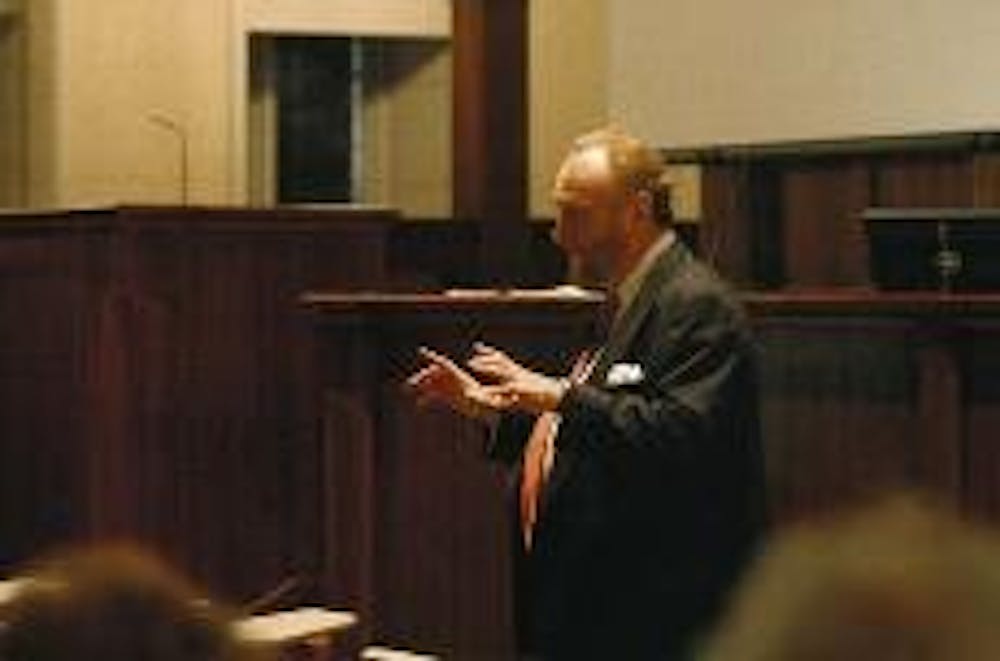
In a presentation yesterday afternoon before several dozen people in College Hall, author and Washington Post contributing writer Joel Garreau argued that the rise of the computer will change America's cities just as much as the invention of the railroad or the automobile.
"All cities are shaped by whatever the big transportation device is at the time," he said. And "the computer is like a form of transportation."
Garreau said places like Santa Fe and King of Prussia represent the future places that people will turn to for "face-to-face contact" as technology eliminates interpersonal interaction in larger urban centers.
He added that cities still have a future because we are "social animals."
Universities, offices and bookstores can function digitally, Garreau said, adding that "the more we digitize, the more we're going to put a very high value on what we can't digitize."
In response to the increasing encroachment of technology, "we're trying to build cities in which you can take the function of a city and move it into a garden," he said.
Future cities will be defined by "dispersion plus coercion," and will be "urbane, but not urban," he added.
Audience reaction to his ideas was mixed.
"He brought out some points I wouldn't have thought of," Center City resident Joyce Poctnoy said.
Former Philadelphia traffic engineer Gihon Joran was skeptical of the reasoning behind Garreau's ideas.
"He's got a point, but there was a lot of what he said that I didn't agree with," Gihon said.
In a question-and-answer session following the presentation, some audience members said they were left wondering what would happen to the urban poor if Garreau's hypothesis were correct.
But Garreau explained that, when people visit a place like Santa Fe, they must now more than ever consider "why [they are] going back" to their jobs and lives in their hometowns.

