

W. E. B. Du Bois, a co-founder of the NAACP, once taught classes at Penn. But until now, the University never had a chapter of its own.
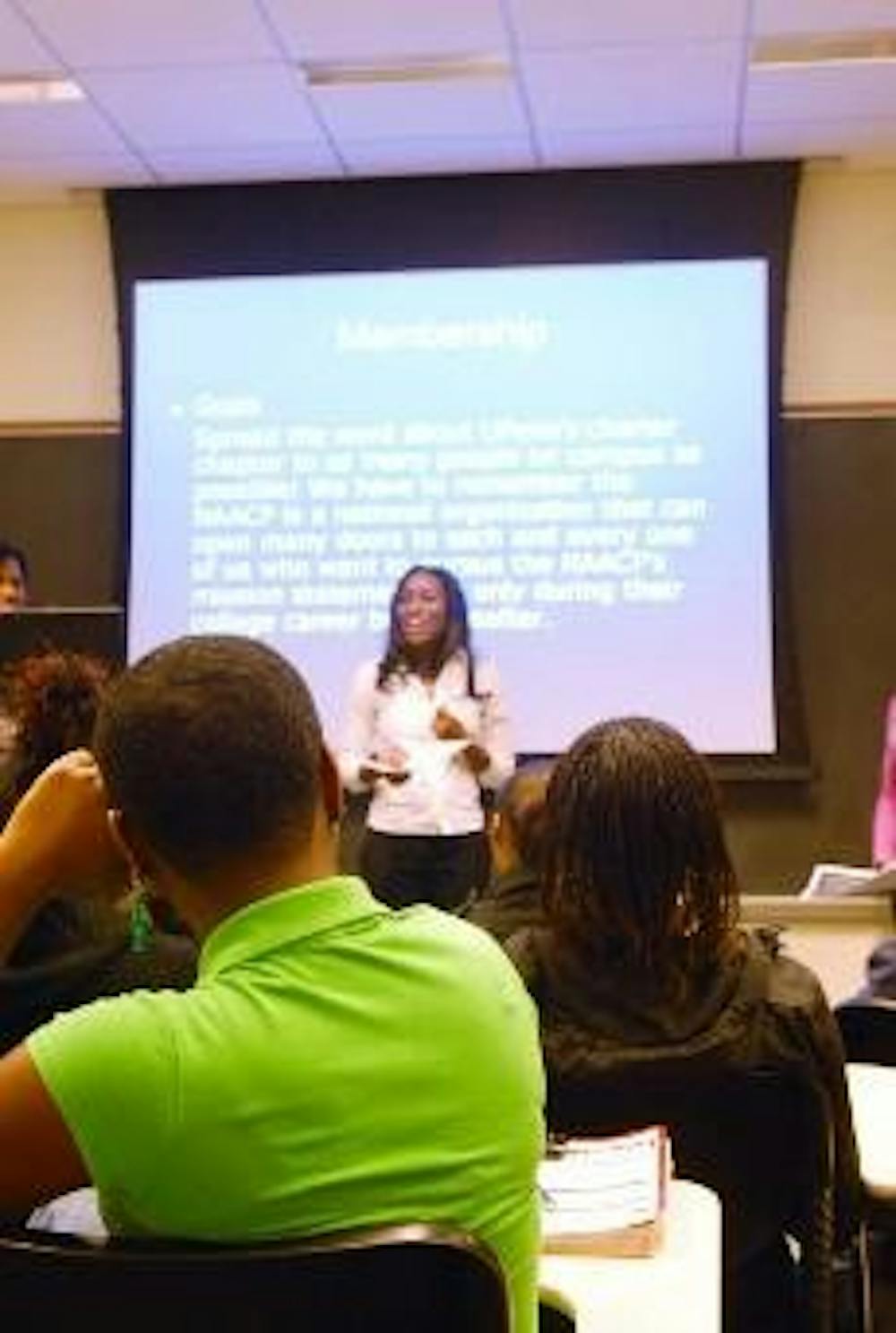
Having elected a board and amassed more than the 25 dues-paying members required to form a chapter, Penn's branch of the National Association for the Advancement of Colored People, a civil-rights group, recently held its first public meeting.
And though they are new, they have an ambitious agenda for their first year.
The group is in the process of applying to both Umoja, the umbrella organization for black student groups, and the United Minorities Council, said College sophomore and group president Afia Genfi.
Leaders said they hope to confront issues both on campus and off, including the unionization of Allied-Barton security guards and the "gross inadequacies" within the Philadelphia public-school system.
They also plan to collaborate with the NAACP chapters at Temple and Drexel universities.
Though Penn already has a variety of cultural groups, the new group's mindset will be, "the more, the merrier," said College sophomore and group vice president Jocelyn Chandler. She added that the Penn NAACP will take advantage of every opportunity they have to work with other organizations.
Leaders expect 2007 "to be our breakout year," Chandler said.
The group's leaders said an on-campus NAACP chapter will provide a needed advocate for social justice in and around the Penn community.
Bruce Lenthall, a Penn History professor who has taught courses on the civil-rights movement, says that NAACP chapters don't all fit the same mold.
"This is an organization with a long history that doesn't have a simple identity," said.
"What this chapter is depends on what organizers want it to be," he said.
Lenthall said he believes that college NAACP chapters of today face a challenge that the organization did not have to deal with in the past: apathy.
Forming an NAACP chapter on Penn's campus has a "symbolic importance," Lenthall said.
And, according to Rev. Elisha Morris, a youth adviser for Philadelphia's chapter of the NAACP who is working with the leaders of Penn's fledgling chapter, it's about time.
"Being a major university, it would make sense to have a chapter," Morris said
"Penn is a fountain of diverse voices," he added.
According to Morris, on-campus NAACP chapters can benefit from the group's status as a national organization.
"You can reach across the country and find out what's going on other campuses," he said.
According to Lenthall, the NAACP is unique in that its purpose is political without being partisan and that it has been inclusive of both blacks and whites since its inception.
Of the many civil-rights organizations that gained prominence during the 1950s and 1960s, "the NAACP had pretty impressive staying power," he said.
Despite many societal shifts, "this organization remains one of the major players," Lenthall added.

