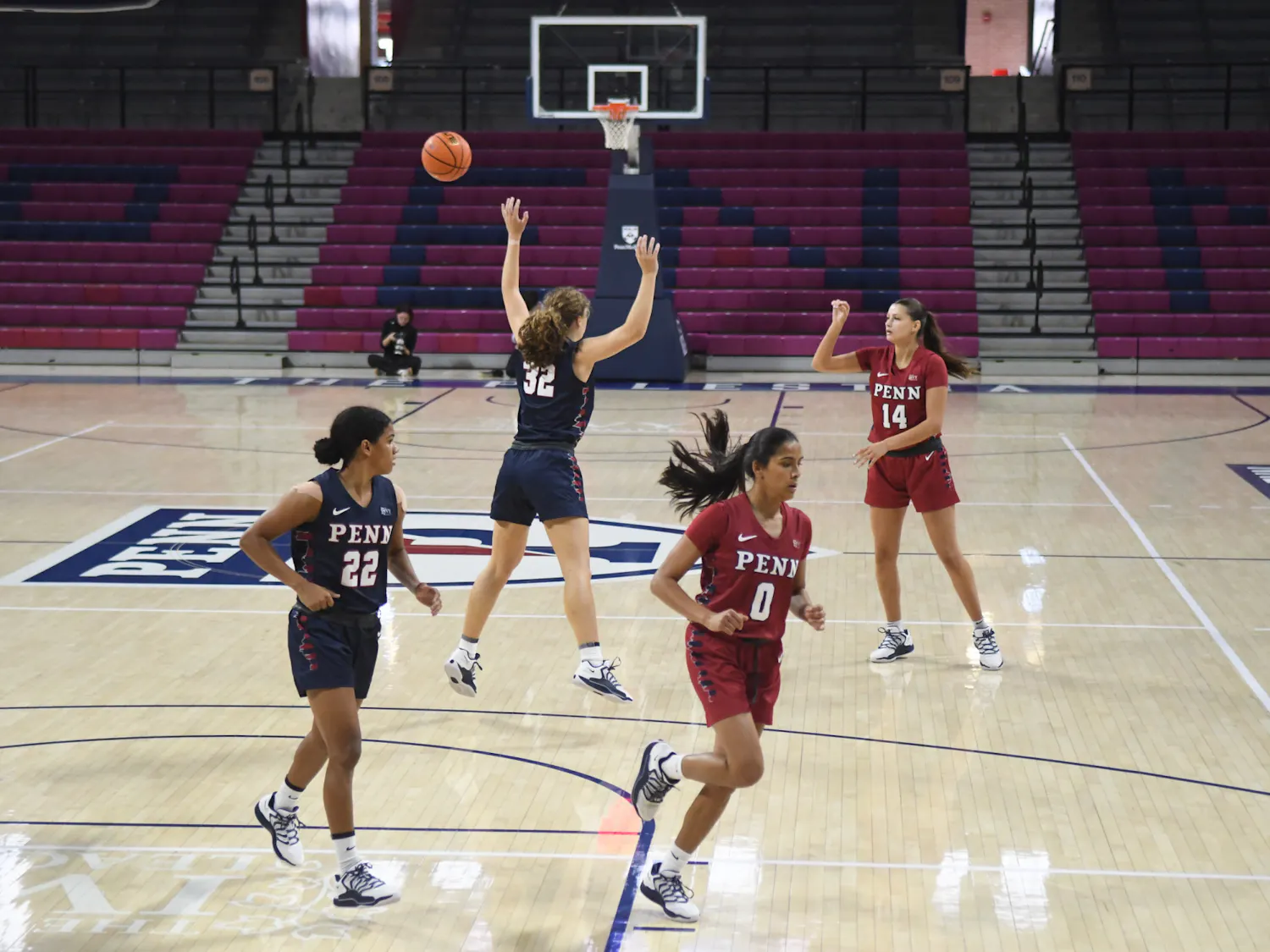
A controversial decision by the Department of Education has led to what some see as a step backward in the struggle for gender equality in collegiate athletics.
Last week, the Office of Civil Rights issued a clarification on the third part of Title IX, a federal law prohibiting gender discrimination in educational programs and activities. The OCR's new analysis of the test of accommodation now makes it easier for an institution to comply with Title IX regulations.
Instead of the school preempting student interest by creating athletic opportunities for prospective female athletes -- as was the case under the old interpretation -- the onus now falls on the protesting students to prove that an institution is not providing enough opportunities for them to pursue their athletic interests. Until then, the institution is not obligated to take any action.
According to the OCR's Web site, "An institution will be found in compliance with part three unless there exists a sport(s) for the underrepresented sex for which all three of the following conditions are met: (1) unmet interest sufficient to sustain a varsity team in the sport(s); (2) sufficient ability to sustain an intercollegiate team in the sport(s); and (3) reasonable expectation of intercollegiate competition for a team in the sport(s) within the school's normal competitive region."
Contrary to prior interpretation, the OCR now allows a school to offer proportionally fewer athletic options to one gender as long as the school is not failing to address any student demand for more athletic programs.
Universities will be allowed to gauge student interest through surveys -- sent via e-mail -- and as long as there is no student protest, the OCR will deem the institution in compliance with Title IX.
Mike Moyer, executive director of the National Wrestling Coaches Association, said to The NCAA News that he sees the change as a "step in the right direction."
"It's the first time there's a common-sense alternative to the gender quota that institutions have been bound to," he said.
However, Moyer is one of few publicly supporting the motion.
NCAA Director Myles Brand immediately expressed his disappointment in the emphasis the OCR places on the e-mail survey as a measure of student interest in athletics.
"The e-mail survey suggested will not provide an adequate indicator of interest among young women to participate in college sports, nor does it encourage young women to participate," Brand said in a statement last week. This failure "will likely stymie the growth of women's athletics and could reverse the progress made over the last three decades."
Penn softball coach Leslie Moore was particularly upset by the OCR's ruling that a non-response from a student will signify that the student has no interest in athletics, and therefore that the school does not have to worry about her.
"It is a way oversimplified way to survey the interest of the student body and will really skew perceptions," she said. "You know how many surveys you see every day ... It's flawed logic, and it could certainly hurt women's opportunities."
Moore suggested other methods of gauging interest, such as asking for the opinions of coaches and administrators -- both of which Penn's athletic department does, according to Assistant Athletic Director Mary DiStanislao.
Wharton lecturer and principal of Hudson Sports Consulting Scott Rosner said that putting the burden on students to protest inequality has the potential to deprive them of the ability to participate in college athletics.
"The inherent problem with the overreliance on surveys is that they judge past experience," he said. "So if you have never played sports before or were discriminated against in the past, you're not going to be interested in playing.
"All it's doing is perpetuating past discrimination."
According to Rosner, the announcement of the interpretation was made quite "surreptitiously." Despite all the publicity surrounding last spring's review of Title IX, this clarification was slid under the radar in a suspicious manner.
Moore was concerned with the political implications of this interpretation.
President Bush "has pretty much established himself as against Title IX, but backed off against it before the election because he knew he would lose votes from soccer moms and dads," she said. "And now the Department of Education just made this edict with no opinions from anyone -- even the NCAA. That's a pretty cheap move."
Most are concerned with how it will change non-compliant institutions -- accommodating schools like Penn will be less affected.
"Some schools may see this as an opportunity to sit back and wait for students to come to them," DiStanislao said. "At Penn we will continue to be open and seek input from our students."
"With such a litany of teams, it's hard to think of where they're missing anything," Rosner said of Penn.
DiStanislao also mentioned that she does not expect this interpretation to change the practices of the Penn athletic department.
Though Penn appears steady in its efforts to sustain gender equality, the potential of the interpretation to affect other schools nationwide remains.
"I always tell recruits' parents is that the reason they're here and I'm here is Title IX and people need to know that," Moore said. "It would be really unfortunate if the progress women have made was undermined by a political move like this."