

To the Editor: When was the last time you heard about a bicycle totalling a car in a collision? The University's main thoroughfare, Locust Walk, is off-limits to bikers during most class hours and is usually too congested to ride anyway. What are bikers to do? Closing off Spruce and Walnut to through traffic would be a cyclist's dream, but it would never be approved. (Although the city does close off Chestnut Street downtown for most of the day.) Bike advocates have been screaming for bike lanes all of my four years at Penn but I still don't see any planned. If I wasn't so confident in my riding ability, there'd be no way in hell I'd ride in the street; I can't blame many cyclists for using the sidewalks. Drivers in Philadelphia won't recognize bikes as vehicles. The University can't expect to post more "Share the Road signs and have them be effective." They are ineffective as it is. Something drastic must be done and it must be done soon. Paul Shinn College '97 n To the Editor: When Public Safety Managing Director Thomas Seamon came to Penn, I wrote him about the problems of speeding bicyclists on campus sidewalks -- particularly on the Walnut Street sidewalk between 33rd and 38th streets. I received no reply. I am fully aware that University Police are concerned with many matters, including rising crime in the area, and that speeding bikes are not a priority. But it is a matter of concern to pedestrian and cyclists, and a collision could lead to serious injury. The University's Bicycle Policy states: "The Philadelphia Code prohibits any person above the age of 12 from riding a cycle on any sidewalk or pedestrian pathway in a business district. The Penn campus area meets the definition of a business district" (Almanac, 9/20/94). It often seems that cyclists banned from Locust Walk between 8:30 a.m. and 5:30 p.m. have simply moved a block over to the Walnut Street sidewalk, weaving between pedestrians and sometimes going faster than the cars on Walnut! During the nearly 10 years I have worked at Penn, I have been hit from behind by a bike, have seen other pedestrians hit, and have witnessed numerous near-collisions. I hope the University and city of Philadelphia will create bike lanes on Spruce Street, as was proposed last December. Such lances would benefit both cyclists and pedestrians. But if the University is not going to adhere to its own bicycle policy, could it at least initiate and enforce some kind of speed limit for cyclists on the sidewalk? Marcia Berner Performance Activities Coord. Music Department Addressing crime To the Editor: I have been reading the Letters to the Editor and most of the articles in the DP concerning safety on campus. While the administration is to blame, they alone cannot solve the problem. We as students, faculty and other users of Penn's campus must realize that this is our campus. We came to Penn with the knowledge that it was not the safest environment in which to live and work. If we didn't know earlier, we know now. Instead of leaving crime fighting up to the administration, we must look and see if we are doing our best to prevent ourselves from becoming victims of crime. Are we utilizing Escort to its maximum capacity? Are we walking in groups late at night and not talking to strangers, like our mothers taught us in kindergarten? I am not so sure we are. Take the incident last weekend, when a student walking down Spruce Street by herself at 12:20 a.m. was held up when she approached a car to give directions. You might know where the place is, but for the interest of your own safety, lie. Say you don't know where it is and keep moving. Don't stop and approach the car. Maybe I already know these things because I come from a big city. But if others don't realize that honesty and "being nice" take a back seat to safety, they better learn quick. If these preventative measures aren't enough, then I propose that the whole University community take a stand and show the criminals who are lurking in our environment that we won't tolerate any more crime. To borrow from the National Organization for Women, we should have a "Penn Unite, Take Back the Night," event this semester to show that we won't tolerate this infiltration of crime in our community. If we work together, act smart and show some solidarity, criminals won't stand a chance. Afsaan Saleem College '97 n To the Editor: We are all screaming at the administration to beef up security -- but without knowing what steps are feasible or truly effective. Why doesn't Penn look at the safety measures in place at other schools of our size in equally dangerous cities around the country? My sister went to Johns Hopkins University in Baltimore. The Hopkins campus is also on the "wrong side" of town, yet it has many fewer problems than we do. Why? They have security officers doing rounds constantly to on- and off-campus offices, dorms and housing. Every hour these officers check in, make sure all is OK and generally make their present felt. Their walking and driving escorts come within 15-20 minutes of being called. I do not blame the Penn Escort walkers or drivers for our system's slowness; the system itself needs a major over-hauling. But honestly, is it safer for me to call Escort from 39th and Cedar streets and wait on the corner for them for one-and-a-half hours -- or to just get the hell out of there? These are just two simple examples of programs that Penn could easily imitate. Other equally doable ideas are to install more street lights in frequented areas (such as 34th and Walnut streets) and to stop ignoring the problem of panhandling on campus. Penn is not the only school fighting a crime problem. University President Judith Rodin should seriously investigate other schools' programs to learn why their problems are not so out of control. We don't have to necessarily build a wall around ourselves like Harvard? but then again, maybe this is not such a bad idea. Kathryn Finnefrock College '98 Better living downtown To the Editor: I graduated from the College in 1994 and am currently a third-year grad student in the School of Arts and Sciences. Safety issues have been a major concern since I first enrolled in 1990, and given the recent rash of crimes against students I'm glad the administration is attempting to formulate measures to increase student safety. However, as a grad student who has chosen to live downtown, I am somewhat perturbed that convincing (or coercing) people like me to move west of 40th Street is one of these measures. Graduate students greatly outnumber undergraduates in enrollment. As a former undergraduate, I agree that undergraduate safety is a legitimate concern. As a graduate student, I do not appreciate being used to address this concern. Given the widespread sentiment that our needs get short shrift at the University anyway, I doubt other grad students appreciate it either. I've paid my dues. I lived in West Philadelphia for six long years. I didn't move across the river because I felt unsafe -- I didn't, in particular -- but because my quality of life is higher downtown. I lived at 40th and Spruce my first two years of graduate school, and found it to be too loud, too boisterous, too messy and too far from the things I wanted to do. This environment was fine when I was an undergraduate, but I have different needs now. Downtown, I live in a more serene environment and am closer to the cultural and recreational resources that suit me and my peers. I don't want to live like an undergraduate anymore. Nothing in the world is going to convince me or people like me to live next door to frat houses again. I left West Philadelphia because it was miserable to live there. The student-inhabited portion of West Philadelphia is simply not suited to a productive graduate career. There are probably things the University could to do make it so -- but just pouring grad students into the area isn't likely to do it. Melanie Lee Chang Anthropology Doctoral Student Hockey team alive and well To the Editor: I was enjoying "Ivy Roundup" (DP, 10/10/96) until I came upon the reference to Penn's seemingly non-existent ice hockey teams. I was appalled to learn of Penn's lack of awareness of its own athletics and found it ironic that in her attempt to roast the author of I Hate Penn, your reporter exposed her own ignorance. Comments about the "non-existence" of teams generate little fan support for Penn's lesser-known squads. Sure, our ice hockey teams are not given varsity status, but we do have our own ice rink -- dedicated to Penn alumni -- and it would be absurd to assume there are no ice hockey players within the entire student body ambitious enough to take advantage of it. Jeff Yan College '00 Modem policy foolish To the Editor: Imagine if Noam Arzt, director of information technology architecture for Information Systems and Computing, were placed in charge of the library. What if he instituted the policies that have now been set in place for Penn's modem pool? Students would only be allowed to use the library for one hour at a time. Then they would be pushed -- forcibly and without warning -- out the front entrance, only to turn around and walk back in for another hour when the process would be repeated. Students who only wanted to check out or return books could walk in through another entrance. But they would be kicked out after 15 minutes inside. Dedicated students who wanted to spend a whole two hours in the library, but with limited use, could go through a basement entrance but would be forced out and have to re-enter after the two-hour period was finished. If any student was so obsessed with knowledge that she or he wanted to spend more than two hours in the library without leaving and returning? well, the solution would be obvious! The student would just have to go to another library and pay a monthly fee to use its services! These policies might tend to have the effect of discouraging students from spending long hours in the library. But they would be a temporary solution for alleviating crowds at the entrance. The World Wide Web and on-line materials are essential to education in the '90s, not just an added feature. Professors are moving toward increased use of the Internet in their courses. ISC should be supporting this through efforts that encourage students to spend more time on line, not less. This would require planning ahead each semester for the predictable increase in usage so that necessary resources would be there before they were needed. Allowing the crisis to occur and then reacting doesn't work. The audacity Arzt's suggestion that students at an Ivy League school consider signing up with a commercial Internet provider to access their e-mail accounts from off campus says it all. On-line access should be an integrated part of education, not peripheral to it. Ken Banner Religious Studies Graduate Student
The Daily Pennsylvanian is an independent, student-run newspaper. Please consider making a donation to support the coverage that shapes the University. Your generosity ensures a future of strong journalism at Penn.
DonateMore Like This


Penn Libraries union alleges administrators bargained in bad faith
By
James Wan
·
19 hours ago

Career Services celebrates 100 years at Penn
By
Ayaan Seshadri
·
19 hours ago

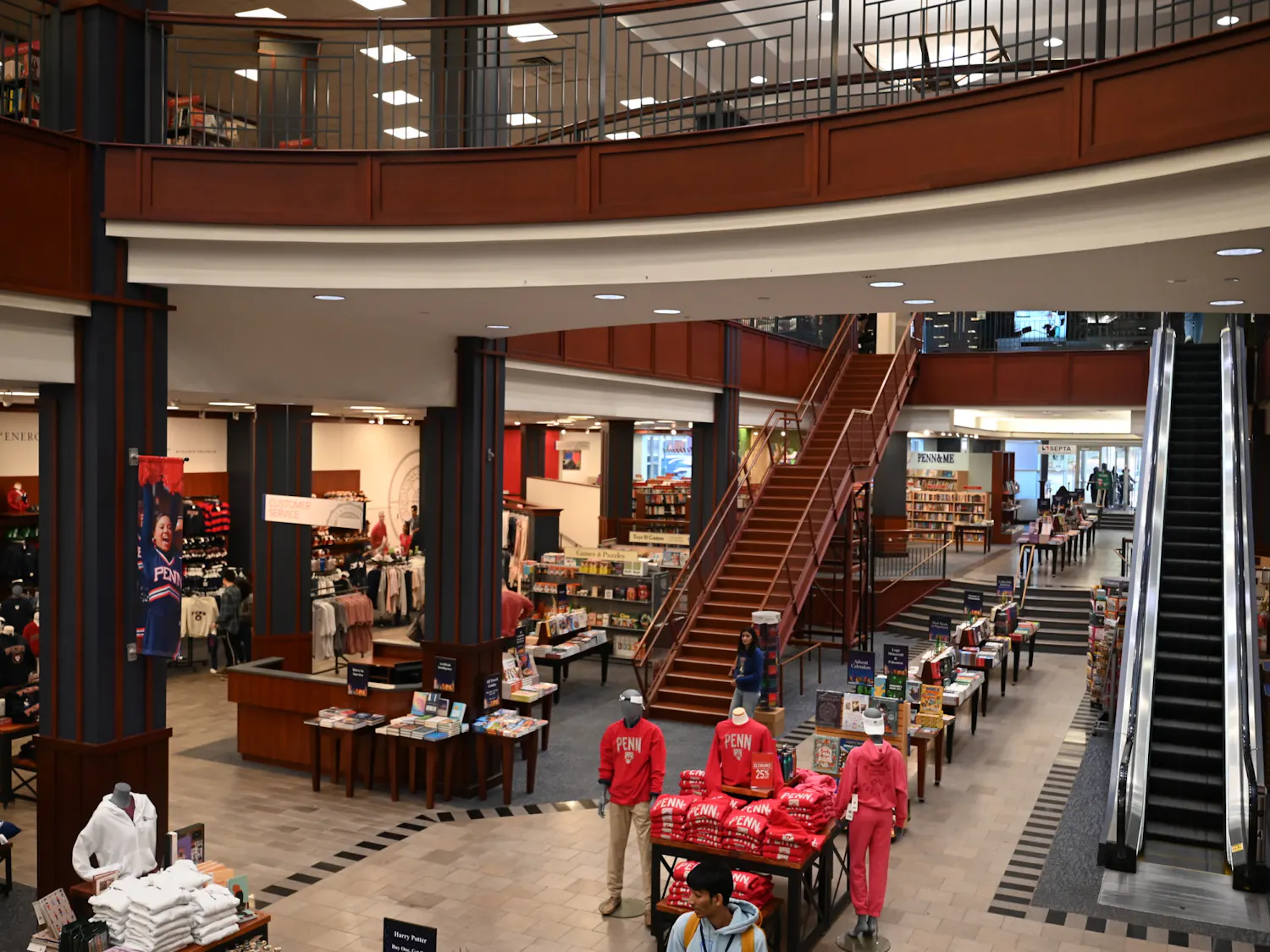
Penn Bookstore hosts College alum, author to discuss new novel
By
Imani Gaskin
·
19 hours ago

