

The mysteries and beauty of India took on a different form Friday as Wharton students focused their attention on the country's emerging economy. Instead of concentrating on India's jewels and spices, the first annual Wharton-India Economic Forum considered issues such as corporate profits and investment opportunities. The forum, entitled "India, Opportunity of the 21st Century," was sponsored by Lehman Brothers at the Hotel atop the Bellevue in Center City. According to second-year Wharton graduate student Venkat Badinehal, who chaired the conference, the organizers hoped to create an awareness and understanding of the economic changes taking place in India. In addition, the conference serves as a bridge between America and India, Badinehal said. The conference hosted a panel of principle architects involved in current revolutionary economic reforms in India -- including top company executives and Wharton School of Business professors. Key speakers at the conference included Victor Menezes, Citicorp's chief financial officer and Wharton graduate Anil Ambani, managing director of Reliance Industries, India's largest private sector company. The entire conference was organized by the undergraduate and graduate members of Wharton's Emerging Economics Program. "India today clearly presents many exciting opportunities," Badinehal said. "The liberalization program initiated in 1991 has spurred tremendous growth in the Indian economy." Nearly 360 executives, professors, students and members of the press attended the day-long conference. Wharton Associate Dean for International Relations Jeffrey Sheehan opened the symposium. "[Indian economic reforms] have unleashed the Indian tiger," Sheehan said, adding that corporations worldwide would have to harness this "tiger" and put it to use. He urged the audience to look at India through the eyes of a historian, instead of those of an investment banker. "I urge you to keep things in perspective," Sheehan said. "Think of India 100 years from now." Ambassador Shyamala Cowsik took a humorous tone as she disagreed with the general perception of how "business and brotherly love cannot coexist." Menezes, the first keynote speaker of the day, discussed India's current situation and the need for its continual growth in the future. He presented a rudimentary list of requirements for sustenance, including a need for a continuous influx of capital and a successful governmental effort. "India cannot generate sufficient domestic savings to finance the growth necessary,"said Menezes. "India must continue to open its markets -- the choice is either go global, or stagnate." He also noted that political changes must be made to reduce India's deficit and spending on economically unproductive projects. Improving India's infrastructure and developing technical and operational skills became key themes throughout the conference. The other speakers dealt with a variety of issues, ranging from international business perspectives in India to competition in the Indian industry. Speakers also complimented the students on the initiative they had taken. "I really think this is a major symbolic event that a lot of interest has been generated of India at Wharton," said Management Professor Jitendra Singh after the conference closed. Students who attended said they were especially impressed by the event's organization and efficiency. "The conference was amazingly well organized," Engineering senior Mukund Krishnaswami said. Wharton junior Ashwin Bajaj, who helped to organize the conference, said he was pleased with the results. "I am confident that it has proved to the people in Wharton and in the business community that India is an emerging economy that is not to be ignored," Bajaj said.
The Daily Pennsylvanian is an independent, student-run newspaper. Please consider making a donation to support the coverage that shapes the University. Your generosity ensures a future of strong journalism at Penn.
DonateMore Like This


New book traces Penn’s landscape, trees through the years
By
Sameeksha Panda
·
6 hours ago

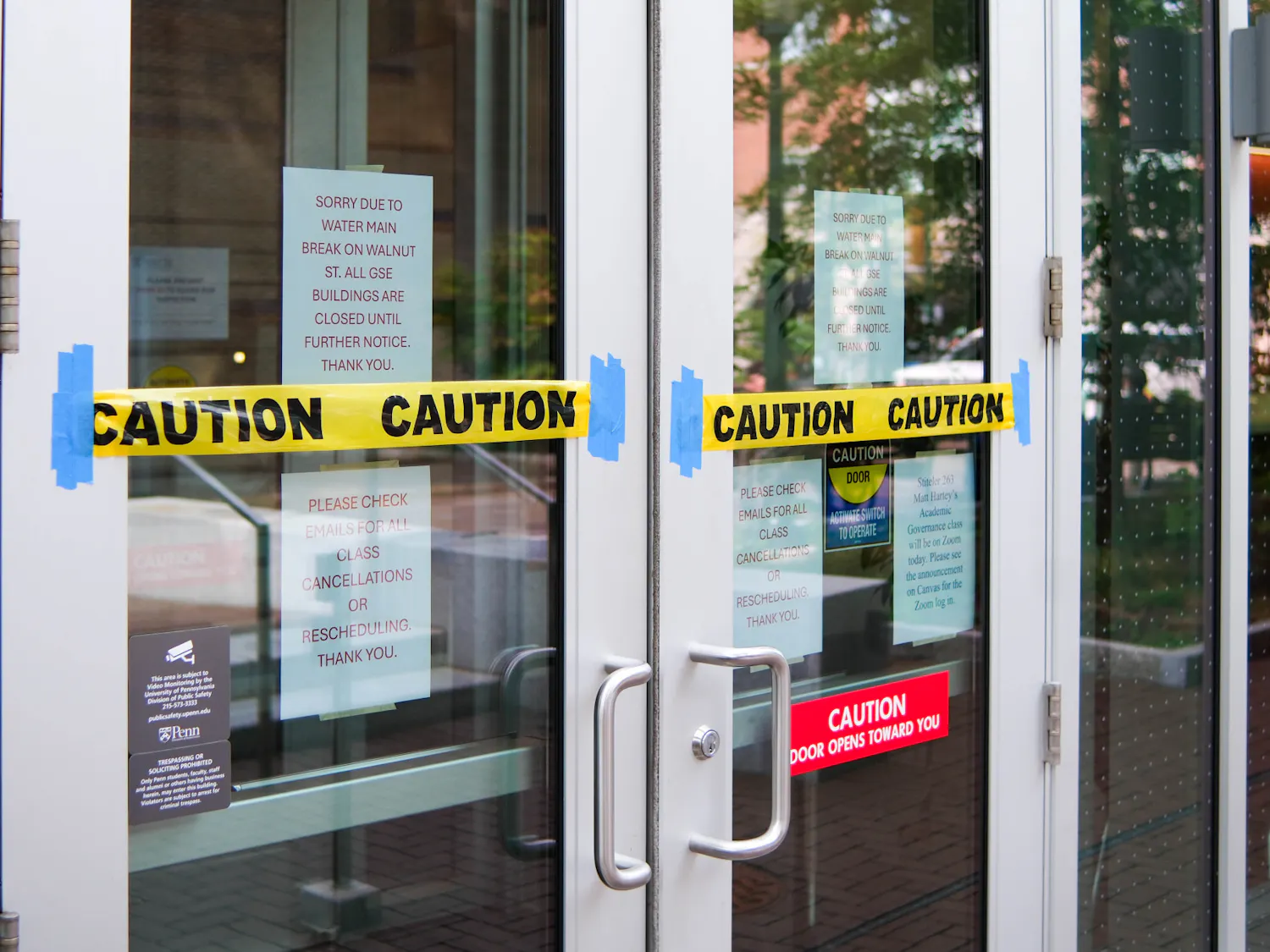
Water main break floods GSE building, moves classes
By
Lavanya Mani
·
12 hours ago


