

To the Editor: Sean Maguire Veterinary Medicine '98 To the Editor: The tragic fire on Christmas Eve that killed 23 primates at the Philadelphia Zoo has led to a colossal outpouring of sympathetic donations from all over the country. Generous contributions run the gamut from thousands of dollars to actual primates loaned or donated from other zoos and endangered species repositories from all over the country. Even the biology department at Penn has mobilized its own Zoo Renewal Fund (as mentioned in the January 12, 1995 edition of the Biology Undergraduate Newsletter). Now I have absolutely nothing against philanthropy, especially when the ulterior motivation is both educationally and environmentally sound. But is this really the time to ask the public for donations to replenish a primate exhibit that was destroyed not by fire or smoke, but by pure negligence on the part of top zoo officials? Newspaper articles and zoo officials were all to quick in scapegoating two security guards who were quoted as saying that they "often smelled smoke" from nearby rail lines, and thought nothing of it until it was too late. On the day after the fire came the talk by top zoo officials of "inadequate training" on the part of the security guards. First of all, what responsible zoo deserving of my money, or anyone's money, let alone the declaration of a sanctuary for endangered species, uses minimum wage security officers on sporadic foot patrol as their "system" to detect fires -- in lieu of standard smoke detectors, sprinklers, and video surveillance cameras? I question whether such a purported system is even in compliance with Philadelphia's strict fire code. The fact that this Titanic was allowed to even leave drydock is where the tragedy lies, folks. Regardless of who ends up being at fault, upper-echelon zoo officials must take full responsibility for what they will call an accident, but what I will call an accident that was WAITING TO HAPPEN. So before everybody jumps on the emotional "replenish the monkeys" bandwagon and starts to turn their trouser pockets inside out for a donation, it may be a better investment for all to give nothing at the moment and first ensure that those responsible for the primates' well-being are in fact CAPABLE of protecting these wonderful creatures. Had an adequate smoke detector or sprinkler system that was interfaced with a central alarm been in place, zoo officials would not have to act so "surprised" at what a fire can do. Anybody who is surprised at the fact that a fire and its thick smoke can kill animals in minutes flat should never have left kindergarten, and certainly should not be soliciting contributions under the false pretense of preserving endangered species -- unless of course such contributions will be used by zoo officials to rent "Towering Inferno." Until the Philadelphia Zoo has demonstrated to the public that present management is worthy of the privilege of housing endangered species, the only donation it will get from me is a fire extinguisher -- and maybe a smoke detector or two. Phil Marques College '96 TAs could strike here, too To the Editor: I am a little unclear about some of Vice Provost for Graduate Education Janice Madden's comments about the TA strike at Yale. In The Daily Pennsylvanian, she was reported as saying "There's never been a discussion about it here" ("Yale TAs protest, withhold grades," 12/14/95). Did she mean there has never been a discussion about unionizing TAs at Penn? I can't believe she is unaware that unionization has come up as an issue in graduate student forums at least twice since 1992. Certainly the Office of the Graduate Dean seemed very concerned at the time. So she must have meant something else. Second, to quote the DP again, "Madden also said that Penn TAs receive higher stipends than Yale TAs." Yale TAs reportedly make $4,970 per semester. In the School of Arts and Sciences here at Penn, the TA stipend per semester is $5,000. Thirty dollars per semester is not significantly higher, and when you add to that the fact that the City of Philadelphia considers TAs as employees, and thus slaps them with a four percent wage tax, suddenly Penn TAs are paid less than Yale TAs. Of course, the University considers TAs students, which ensures that they must pay their health insurance costs (well over $1,000 per year, which must be paid in two lump sums -- monthly payments not allowed). One begins to wonder whether those who bear such a large portion of the undergraduate teaching load are in fact "[being paid] appropriately," to quote Madden a third and final time. What has happened at Yale could happen here, too. Ed Baptist Doctoral Student History Department
The Daily Pennsylvanian is an independent, student-run newspaper. Please consider making a donation to support the coverage that shapes the University. Your generosity ensures a future of strong journalism at Penn.
DonateMore Like This


New book traces Penn’s landscape, trees through the years
By
Sameeksha Panda
·
3 hours ago

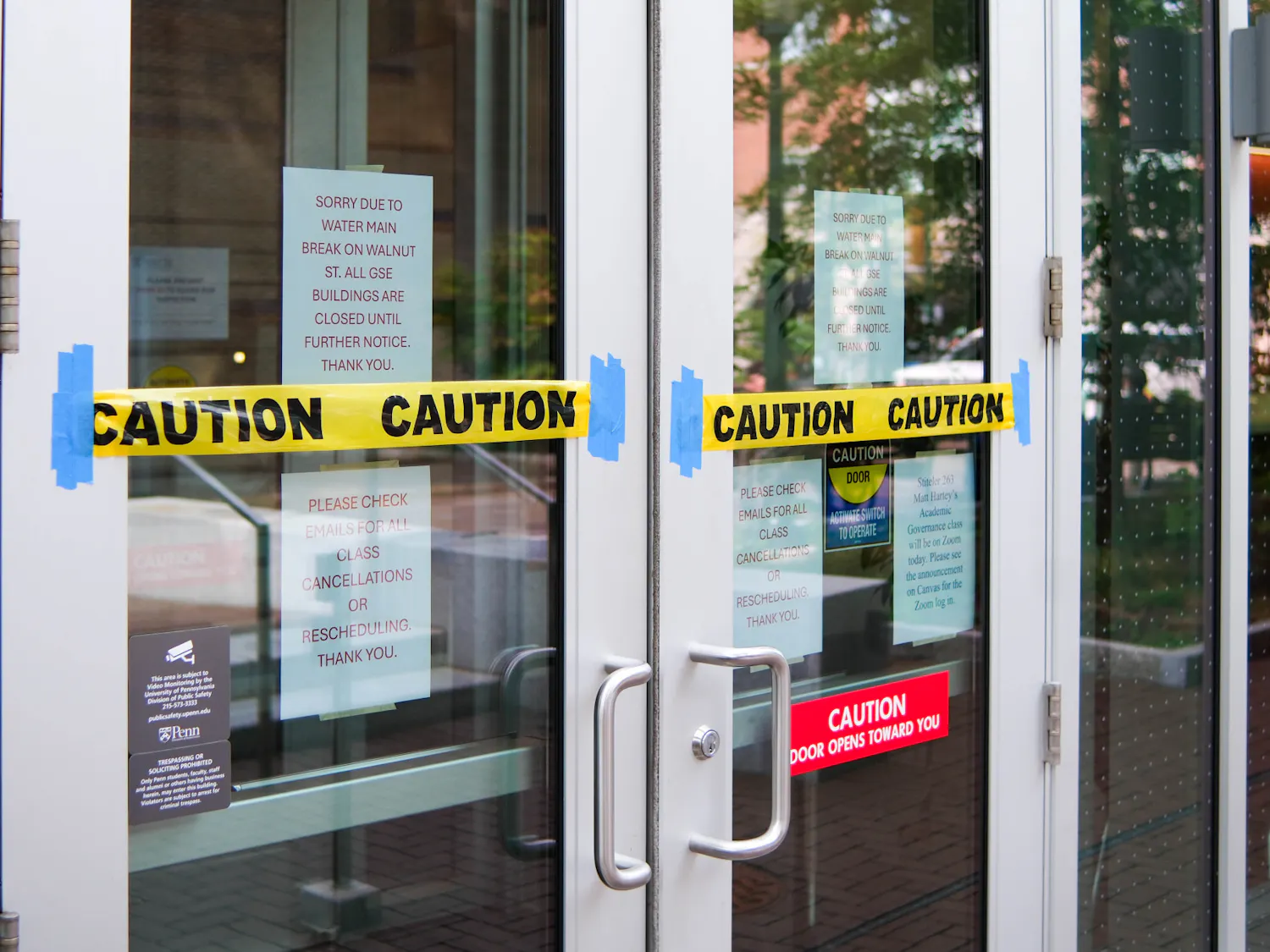
Water main break floods GSE building, moves classes
By
Lavanya Mani
·
9 hours ago


