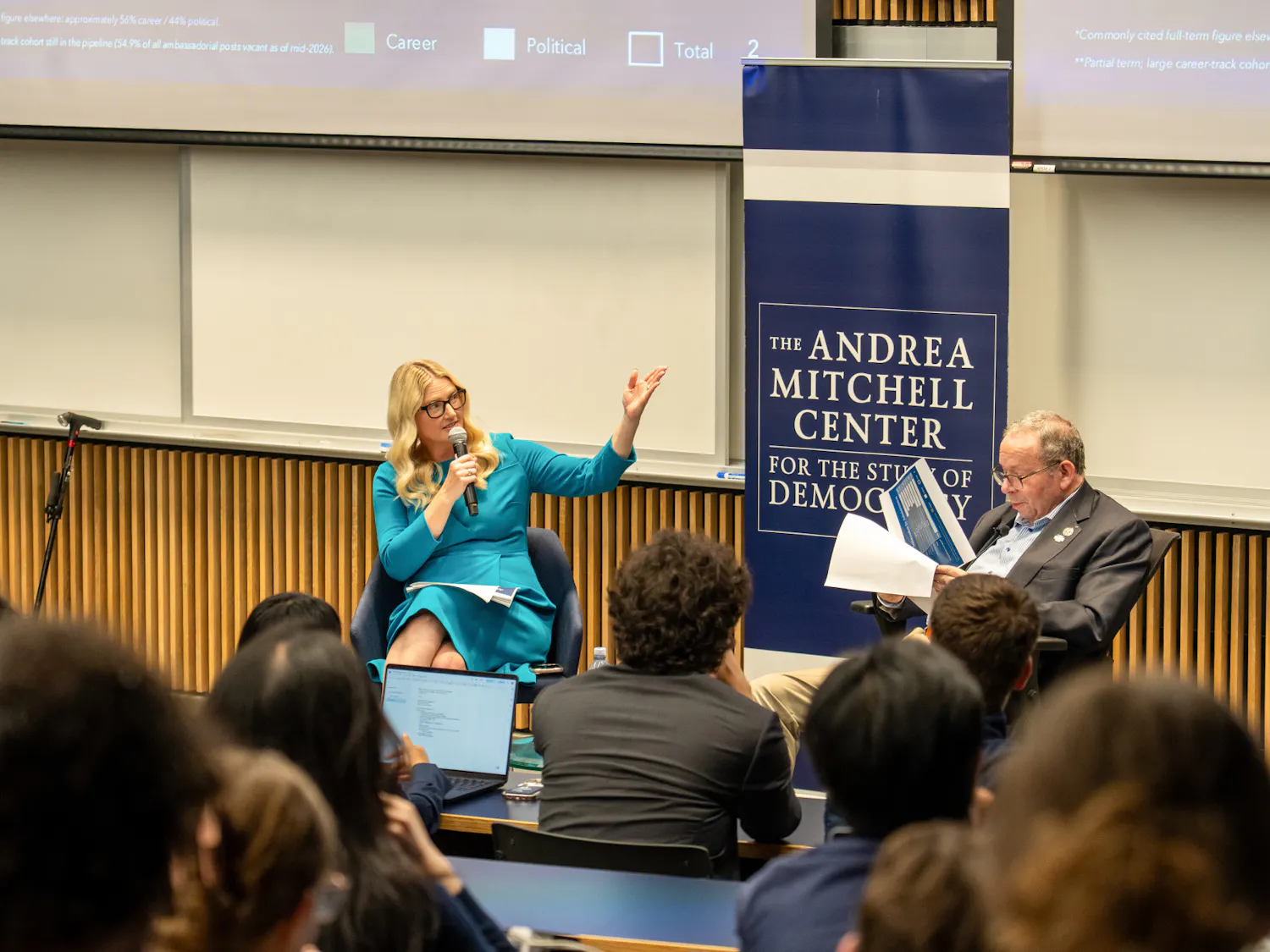
Former Massachusetts Governor and 1988 Democratic Presidential candidate Michael Dukakis told a crowd of over 400 in Dunlop Auditorium yesterday that health care and the national economy will be the second toughest challenge facing President-elect Clinton. In his speech entitled "Election Year Health Care Reform: Lessons from the States," Dukakis outlined the plans that various states have implemented in an attempt to combat the rising health care costs in this country. He covered plans that Hawaii, Vermont, Massachusetts, Oregon and Minnesota have passed and addressed the pros and cons of each system. Dukakis said that the most successful of these systems is Hawaii, which implemented its policy in 1974. Hawaii's plan requires employers, regardless of size, to provide health insurance for its employees. Hawaii also has a small public plan to cover the temporarily unemployed and part-time workers not covered under their employers. The state also adopted technology controls and a single risk pool to help control costs in the state, Dukakis said. Dukakis said the results from the Hawaiian plan are very impressive. There is virtually universal health care coverage in the state and health care costs in Hawaii are equal to those of Canada. "Health outcomes in Hawaii are the best in the country," Dukakis said. Hawaiians visit their primary care physican more often but have 40 percent less hospital visits, Dukakis said. In 1987-88, Massachusetts also implemented plans to reform the health care insurance and delivery system, Dukakis said. The state reformed their malpractice laws, which resulted in a one-third reduction in malpractice premiums in the state, and tried to implement an employer-mandated system. This year, Oregon tried to implement a plan that would have provided the vast majority of its citizens with health insurance coverage, Dukakis said. This plan would have rationed health care to those on Medicaid in an attempt to contain costs. This rationing plan was ruled in violation of the Americans with Disabilities Act, which took effect this summer, by the Department of Health and Human Services. This decision left the fate of the Oregon plan uncertain, Dukakis said. Dukakis said that he did not advocate a Canadian-style system for the United States because the political opposition to such a system would be strong. Instead, he advocated a system where the government does not write insurance policies but gives conditions that insurers and Health Maintenance Organizations are required to follow. These conditions, he said, would help provide universal access. Dukakis concluded his speech by saying that universal employee-based system must include provisions that cover small businesses. And any plan must include both primary and catastrophic coverage, he said. He added that a limited number of insurers and Health Maintenance Organizations working with health regulators can keep costs down, and that general practitioners must act as the entry point into the medical system. Dukakis also said that health care reform will not be achieved on a state-by-state basis but on the national level. The reaction to the speech delivered by Dukakis was very positive. The audience members included Senator Harris Wofford, who Dukakis credited with placing universal health care on the national agenda. "I came here to learn more about health care policies. I agreed with all that Dukakis said," Jeong Yoon, a College junior, said. Amy Sykes, a College senior, said "political opposition to a Canadian system is true. Clinton and the Democratic Congress will have to take the lead on this issue." The private market is in place and they will have to work within that context, she added.
The Daily Pennsylvanian is an independent, student-run newspaper. Please consider making a donation to support the coverage that shapes the University. Your generosity ensures a future of strong journalism at Penn.
DonateMore Like This

A history of the Penn presidency
By
Aidan Shaughnessy
·
7 hours ago

No — AI will not wipe out humanity by 2030, Penn experts say
By
Addison Saji
·
7 hours ago


Penn student groups promote voter registration on Locust Walk
By
Mara Flores
·
7 hours ago